Meet Chamomile
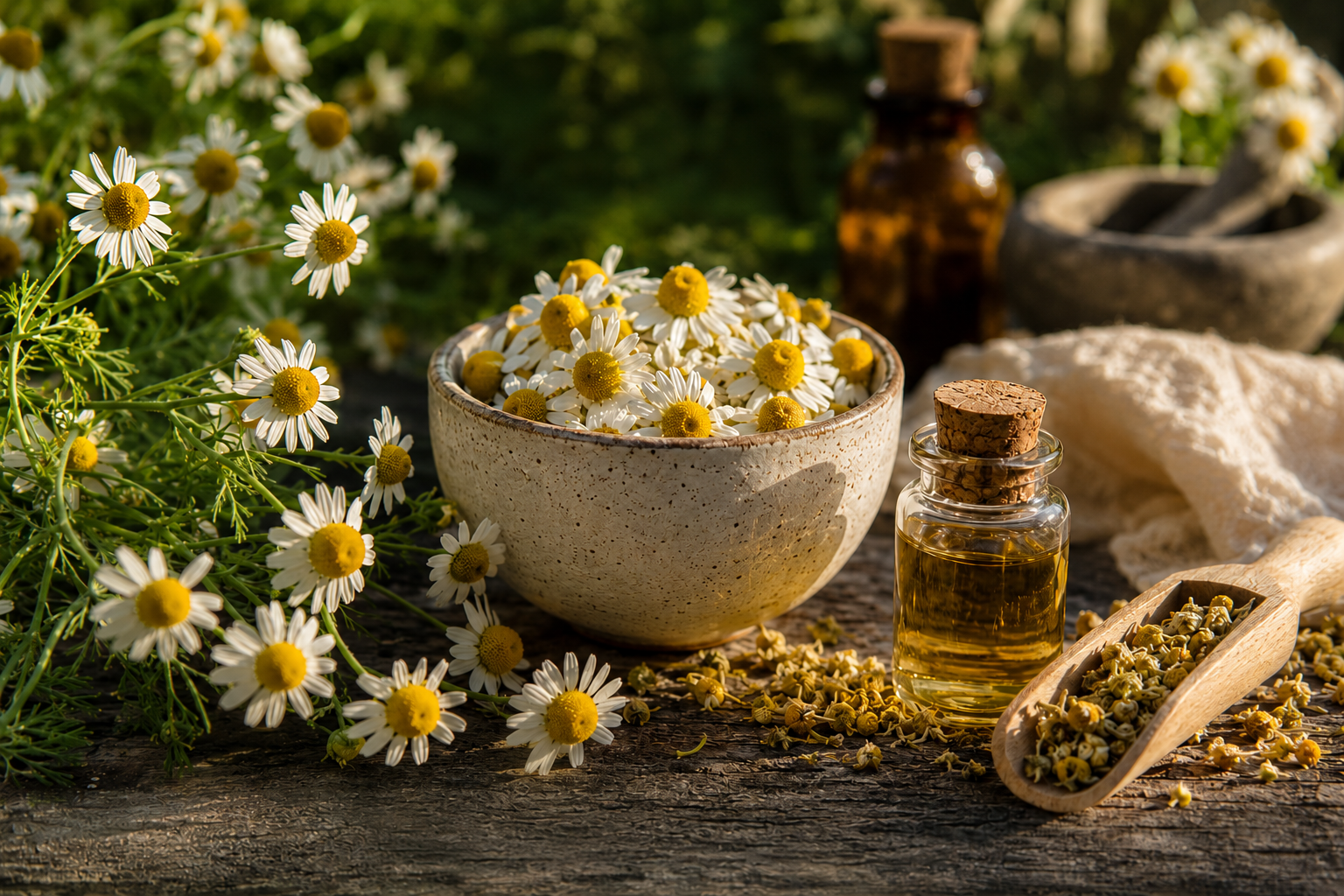
Matricaria recutita
(with a nod to its close cousin, Chamaemelum nobile)
Soothe • Comfort • Restore • Ease • Brighten
Chamomile is one of herbalism's great soothers.
It has an uncanny ability to take the edge off pain, irritation, inflammation, and the nervous tension that knots the stomach, tightens the muscles, shortens the temper, and steals restful sleep. Wherever life has left us feeling rubbed raw, chamomile arrives with remarkable gentleness.
Its reach extends far beyond bedtime tea. Across centuries of herbal practice, chamomile has been relied upon to ease digestive upset, intestinal cramping, colic, menstrual discomfort, inflamed skin, allergic reactivity, restless sleep, and the countless ways emotional distress finds expression in the body. Herbalists frequently prescribe it as a remedy for conditions made worse by stress, overstimulation, or hypersensitivity.
Matthew Wood calls chamomile a remedy for "babies of any age," and I can't think of a better description. Chamomile is for those moments when everything feels irritating, when patience is thin, discomfort feels outsized, and even small burdens seem difficult to bear. It gently widens the space between sensation and reaction.
As an herb of the Sun, chamomile carries a quiet brightness. It doesn't force optimism or suppress difficult feelings. Instead, it reminds both body and spirit of their natural ease. The world feels a little less sharp. The stomach unclenches. The breath deepens. The mood softens.
Unlike stimulating solar herbs, chamomile expresses the benevolent face of the Sun. Its warmth is reassuring, vital, and confidence without being aggressive. Like the first gentle warmth of morning after a long night, chamomile reminds the body that it can unclench, exhale, and begin again.
Perhaps this is why chamomile has long been associated not only with healing, but with good humor, prosperity, purification, and protection. When irritation softens, there is room once again for patience, generosity, curiosity, and joy. The world itself hasn't changed, but our relationship to it has.
Sometimes that small shift is enough for healing to begin.
How to Work With This Ally
Chamomile is one of those rare herbs that feels just as at home in everyday life as it does in the medicine cabinet. It asks very little of us while offering remarkable generosity in return.
Most people first meet chamomile as a warm evening tea, but that is only one expression of the relationship. A freshly brewed cup after a difficult day can soften the grip of nervous tension before it settles into the stomach. An infusion after a heavy meal can ease bloating, gas, and digestive discomfort. A stronger tea becomes a soothing compress for irritated skin, a cooling rinse for minor inflammations, or the foundation of a calming bath.
Chamomile has also long been prepared as an infused oil, poultice, bath, and wash for sore muscles, bruises, diaper rash, burns, allergic skin, and minor wounds. It is as comfortable beside the bathtub as it is beside the teapot.
Chamomile is also a wonderful herb to live alongside. Scatter its seeds on the surface of the soil where they can receive sunlight, and the tiny daisy-like flowers will often return year after year with very little encouragement.
For centuries, chamomile was intentionally planted along garden paths and green walks so its sweet, apple-like fragrance would be released beneath each passing footstep. Esoteric herbalist Paul Beyerl recounts the old saying, "Like a chamomile bed, the more it is trodden, the more it will spread." There is something wonderfully fitting about that image. Rather than being diminished by life's footsteps, chamomile seems to flourish beneath them.
Gardeners affectionately call chamomile the "physician of the garden," believing it encourages the health of neighboring plants and even helps protect them from insects. This title beautifully mirrors chamomile's character. It has an extraordinary ability to bring ease and harmony wherever it grows.
There is something quietly reciprocal about tending chamomile. As we care for the plant, it gently teaches us how to care for ourselves.
The Cherokee, introduced to chamomile after contact with Europeans, embraced it so completely that it appears in three of the four directional medicine traditions described by J.T. Garrett in The Cherokee Herbal.
In the East, it is valued as a calming tonic for the heart, circulation, and nervous system.
In the South, it becomes a healer of skin, burns, inflammation, and a women's medicine.
In the North, it is honored for calming the nerves, easing allergies, supporting restful sleep, and restoring balance to the respiratory system and senses. Few plants are spoken of across so many directions, a quiet testament to the respect this humble flower earned.
Whether growing beneath your feet, blooming beside vegetables in the garden, steeping in a teacup, or infused into a healing bath, chamomile has always invited us into the same relationship. It doesn't demand attention. It simply makes the world feel a little kinder.
If you're preparing tea, cover the cup while it steeps. Much of chamomile's lovely character resides in its fragrant volatile oils, and keeping them in the cup rather than allowing them to drift into the room preserves both aroma and medicine.
Why Chamomile Shows Up Everywhere
At first glance, chamomile's traditional uses seem almost impossibly broad.
It appears in formulas for colic and insomnia, eczema and hay fever, irritable bowel syndrome and menstrual cramps, teething babies and stressed executives. It is recommended for digestive ulcers, inflamed skin, sore muscles, anxious minds, allergic constitutions, restless children, and troubled sleep.
The common thread is irritation.
Chamomile is repeatedly chosen when tissues have become inflamed, muscles have become tight, the nervous system has become overstimulated, or the immune system has become overly reactive. It soothes irritated skin, irritated digestive mucosa, irritated nerves, irritated emotions, and even what we older herbalists sometimes describe as an "irritable disposition."
Chamomile gently reminds the body how to respond without overreacting. Muscles that have clenched begin to release. Inflamed tissues become less reactive. A stomach tied in knots after a difficult conversation begins to settle. Skin no longer flares so readily. The person who felt as though every small discomfort was unbearable begins to find a little more room around the experience.
Perhaps that is why herbalist Matthew Wood's description of chamomile as a remedy for "babies of any age" resonates so deeply. We've all been there. Overtired. Overwhelmed. Overstimulated. Our patience is gone, our nervous system is frayed, and everything feels bigger than it really is. Chamomile meets that state with remarkable kindness.
This may be why it has remained one of the world's most beloved medicinal herbs for thousands of years. Few plants possess such a remarkable ability to comfort so many different expressions of the same underlying state.
Where the Mind Meets the Stomach
Modern research increasingly recognizes what traditional herbalists have observed for generations: the digestive system and the nervous system are in constant conversation.
Our intestines possess their own vast network of nerves, often called the enteric nervous system. Every experience of stress, fear, excitement, grief, or overwhelm changes that conversation. Motility shifts. Digestive secretions change. Pain becomes amplified. Muscles tighten. The gut may move too quickly, producing urgent diarrhea, or too slowly, leading to bloating and discomfort. Even our perception of pain becomes heightened, making ordinary digestive sensations feel far more distressing.
Chamomile seems uniquely fluent in both languages.
It is one of herbalism's classic carminatives, easing gas, bloating, cramping, and digestive spasm while simultaneously relaxing the nervous system that so often contributes to those symptoms. Rather than treating the digestive tract in isolation, chamomile appears to work at the meeting place between mind and body. This is why it shows up so consistently in formulas for irritable bowel syndrome, stress-related dyspepsia, gastritis, reflux, colic, ulcers, gallbladder spasm, functional diarrhea, and the familiar "nervous stomach."
Dr. Jill Stansbury repeatedly describes chamomile as both a nervine and a gastrointestinal trophorestorative, an herb that not only calms but nourishes and restores digestive tissues. It reduces inflammation of the gastric and intestinal mucosa, relaxes smooth muscle, encourages healthy digestive secretions, eases excessive gas and bloating, and supports healing of irritated mucous membranes. It is equally at home in formulas for stress-induced digestive upset, allergic gastrointestinal disorders, inflammatory bowel conditions, and recovery after infection.
Modern investigations support these traditional observations. Chamomile's constituents, including α-bisabolol, chamazulene, apigenin, quercetin, luteolin, and other flavonoids, demonstrate anti-inflammatory, antispasmodic, gastroprotective, antioxidant, and mild antimicrobial activities. Research has explored its ability to support mucosal healing, reduce inflammatory signaling, protect against gastric ulceration, and inhibit Helicobacter pylori, one of the organisms associated with peptic ulcer disease.
Perhaps this explains why chamomile has remained such a faithful digestive ally for centuries. It doesn't simply settle the stomach. It helps restore harmony to the entire conversation between the brain, the gut, and the emotions.
Babies of Any Age
Few herbs have earned such an enduring reputation as a children's remedy.
Chamomile has comforted teething infants, relieved colic, eased digestive upset, softened fevers, and encouraged restful sleep for generations. Yet Matthew Wood reminds us that chamomile isn't really a remedy for children.
It's a remedy for "babies of any age." (And when giving it to children, I recommend the parent also give it to themselves.)
Anyone who has become overtired, overwhelmed, overstimulated, painfully reactive, or unable to tolerate one more discomfort may recognize the chamomile state. Adults experience it every bit as often as children do. It is the plant for the nervous system that has reached its limit, where every sensation feels amplified and every inconvenience feels personal.
Chamomile meets those moments with such grace. It seems to say, "I know everything feels like too much right now. Let me help you carry it for a while."
A Friend to Skin and Mucous Membranes
Chamomile's soothing nature extends well beyond the digestive tract.
Traditional herbalists have long prepared it as compresses, poultices, baths, infused oils, and washes for irritated skin, burns, eczema, diaper rash, allergic dermatitis, bruises, sore muscles, minor wounds, and inflammatory skin conditions. Modern research has identified anti-inflammatory, antimicrobial, antioxidant, and barrier-supportive actions that help explain this longstanding reputation.
One theme appears again and again throughout the literature: when emotional distress accompanies skin disease, chamomile belongs in the formula. Just as stress can tighten the stomach, it can inflame the skin. Chamomile seems uniquely suited to calming both conversations at once.
Many traditional texts also describe carefully strained chamomile preparations as washes for minor eye irritation. Modern safety guidance varies on this practice, with some contemporary references advising against using herbal infusions near the eyes because of contamination or sensitivity concerns. As with many traditional preparations, thoughtful judgment and appropriate caution are warranted.
Where You'll Find Chamomile at Plant Alchemy
Chamomile has earned a permanent place in my apothecary. While it's often thought of as a simple bedtime tea, I reach for it whenever I want to soothe an irritated system, especially when emotional stress and physical symptoms are intertwined. Its ability to calm digestive spasm, soften inflammation, and restore a sense of ease makes it one of the foundational herbs I return to again and again.
You'll currently find chamomile in:
🌼 Nervine No. 9 | Floral Nervine
Chamomile joins a bouquet of restorative nervines to help quiet an overstimulated nervous system, ease emotional tension, and support calm, grounded resilience throughout the day.
🌿 GateKeeper Protocol
Within the GateKeeper collection, chamomile supports healthy gums and oral tissues while soothing inflamed mucous membranes. Its gentle antimicrobial and anti-inflammatory actions make it a natural ally for maintaining oral health and comfort.
🌱 Groundworks Protocol
Chamomile helps bring calm to an irritated digestive tract. Its affinity for the gut-brain connection makes it especially valuable when stress contributes to digestive discomfort, supporting the restoration of healthy digestive function while soothing inflammation along the way.
A Note on the Chamomiles
German chamomile (Matricaria recutita) and Roman chamomile (Chamaemelum nobile) have been used interchangeably for centuries, and many herbalists continue that tradition.
Some practitioners, however, notice subtle differences. German chamomile is often favored for digestive inflammation, allergies, gastrointestinal spasm, and skin conditions, while Roman chamomile is prized for its deeply relaxing influence on the nervous system. Herbalist Joe Dunbar describes Roman chamomile as his preferred ally for settling the mind and German chamomile as his preferred ally for soothing an inflamed, spasmodic digestive tract.
Matthew Wood offers another useful distinction. Fresh preparations preserve more of chamomile's fragrant volatile oils and emphasize its relaxing, antispasmodic nature. Dried preparations, while still wonderfully soothing, reveal more of the plant's gentle bitterness, encouraging healthy digestive secretions and supporting the stomach, liver, and gallbladder.
In practice, both chamomiles remain treasured allies whose medicinal personalities overlap considerably. Like close sisters, each brings her own subtle gifts while sharing the same deeply comforting spirit.
Plant Profile
Botanical Name
Matricaria recutita (German Chamomile)
Close cousin: Chamaemelum nobile (Roman Chamomile)
Family
Asteraceae
Parts Used
Flower
Energetics
Aromatic • Relaxing • Slightly Bitter • Cooling to Neutral
While herbal traditions differ on whether chamomile is cooling, warming, or energetically neutral, they consistently describe its ability to soothe irritation, release tension, and restore balance. Fresh preparations emphasize its fragrant volatile oils and relaxing qualities, while dried flowers reveal more of its gentle bitter action on digestion.
Primary Actions
Nervine • Carminative • Antispasmodic • Anti-inflammatory • Gastrointestinal trophorestorative • Mild antimicrobial • Mild anti-allergenic • Digestive tonic • Diaphoretic • Gentle analgesic • Emmenagogue
Traditional Uses
For centuries chamomile has been one of Western herbalism's foundational remedies for conditions characterized by irritation, tension, inflammation, and hypersensitivity.
Nervous tension and emotional overwhelm • Restless sleep and insomnia • Colic (especially in children) • Gas, bloating, and digestive discomfort • Irritable bowel syndrome • Gastritis and reflux • Functional digestive disorders • Gallbladder spasm • Peptic ulcers • Childhood teething and fussiness • Menstrual cramps and PMS • Allergic skin conditions • Eczema and dermatitis • Burns and minor wounds • Muscle tension and spasms • Bruises and sore muscles • Hay fever and allergic constitutions
Modern Research
Chamomile contains a remarkable diversity of compounds that help explain its longstanding reputation in traditional medicine.
Its volatile oils, flavonoids, and sesquiterpenes have demonstrated:
Anti-inflammatory activity
Antispasmodic effects
Gastroprotective actions
Antioxidant activity
Mild antimicrobial effects
Mild anti-allergic actions
Support for gastric and intestinal mucosal healing
Research has explored chamomile's ability to:
Reduce inflammatory signaling
Relax smooth muscle
Support healthy digestive secretions
Promote healing of irritated gastrointestinal tissues
Protect against gastric ulceration
Inhibit Helicobacter pylori
Support healthy skin barrier function
Notable Constituents
α-Bisabolol • Chamazulene • Matricin • Apigenin • Quercetin • Luteolin • Farnesene • Flavonoids • Coumarins • Bitter sesquiterpene lactones • Volatile oils
Safety
Chamomile has an exceptional reputation for safety and has long been considered one of herbalism's gentlest remedies.
Occasionally, individuals sensitive to plants in the Asteraceae family may experience allergic reactions, particularly those with ragweed allergy. These reactions are uncommon but may include itching, watery eyes, or hay fever-like symptoms.
Traditional herbal literature frequently describes chamomile as an eye wash, while some modern references recommend avoiding herbal infusions around the eyes because of the potential for contamination or irritation. I think it's helpful to know both traditions and to exercise thoughtful judgment.
Esoteric Correspondences
☉ Sun • 💧 Water
Egyptian Sun traditions • Woden • One of the Nine Sacred Herbs of Celtic tradition • Cherokee medicine traditions of the East, South, and North
Themes
Comfort • Restoration • Peace • Self-Compassion • Good Humor • Prosperity • Purification • Gentle Protection • Maternal Care
Traditional Applications
Sleep sachets • Bedside teas • Healing baths • Cleansing incense • Prosperity hand washes • Garden guardian • House blessing • Ritual cups • Protective plantings • Prayer bundles • Affirmation rituals
Plant Teaching
Chamomile reminds me that gentleness is not weakness.
Some of the strongest medicines don't shout. They don't force change or demand transformation. They simply stay beside us until our breathing slows, our shoulders lower, and our bodies remember what safety feels like.
Perhaps this is why chamomile has comforted generations of teething babies, soothed worried mothers, settled anxious stomachs, eased inflamed skin, and found its way into gardens, kitchens, medicine chests, and bedtime rituals across so many cultures. It has always understood that healing often begins with reassurance.
If chamomile has a lesson to offer, I think it is this:
Not every sensation is an emergency.
Not every discomfort requires a battle.
Sometimes the kindest thing we can do is stop fighting every feeling and allow ourselves to be cared for.
Chamomile doesn't ask us to become stronger before we are comforted. It offers comfort first.
And from that place of being soothed, we often discover we were stronger than we realized all along.
References
Bennett, Robin Rose. The Gift of Healing Herbs: Plant Medicines and Home Remedies for a Vibrantly Healthy Life. North Atlantic Books, 2014.
Beyerl, Paul. The Master Book of Herbalism. Phoenix Publishing, 1984.
Cunningham, Scott. Cunningham's Encyclopedia of Magical Herbs. Llewellyn Publications, 1985.
Diaz, J. Plant Witchery: Discover the Sacred Language, Wisdom, and Magic of 200 Plants, 2020.
Dunbar, Joe. Secrets from an Herbalist's Garden: A Magical Year of Plant Remedies. Moon Books, 2022.
Dunwich, Gerina. Herbal Magic: A Guide to Herbal Enchantment, Folklore, and Divination. Citadel Press, 2000.
Easley, Thomas, and Steven Horne. The Modern Herbal Dispensatory: A Medicine-Making Guide. North Atlantic Books, 2016.
Garrett, J.T. and Michael Garrett. The Cherokee Herbal: Native Plant Medicine from the Four Directions. Bear & Company, 2003.
Harrison, Karen. The Herbal Alchemist's Handbook: A Complete Guide to Magical Herbs and How to Use Them. Moon Books, 2020.
Hoffmann, David. The Encyclopedia of Herbal Medicine. DK Publishing. (Edition consulted.)
McGuffin, Michael, et al., eds. American Herbal Products Association's Botanical Safety Handbook. 2nd ed. American Herbal Products Association, 2013.
Stanway, Jules. Herbal Formularies for Health Professionals, Volume 1: Digestion and Elimination. Medical Herbalists Publications, 2004.
Tierra, Michael. The Way of Herbs. Pocket Books. (Edition consulted.)
Weed, Susun S. Wise Woman Herbal for the Childbearing Year. Ash Tree Publishing.
Wood, Matthew. The Earthwise Herbal, Volume I: A Complete Guide to Old World Medicinal Plants. North Atlantic Books, 2008.
This profile weaves together both traditional herbal knowledge and modern scientific understanding. It is intended for educational purposes and should not replace individualized medical advice. As with all herbal medicines, consider the whole person, their health history, and appropriate safety precautions before use.
