Meet Cramp Bark
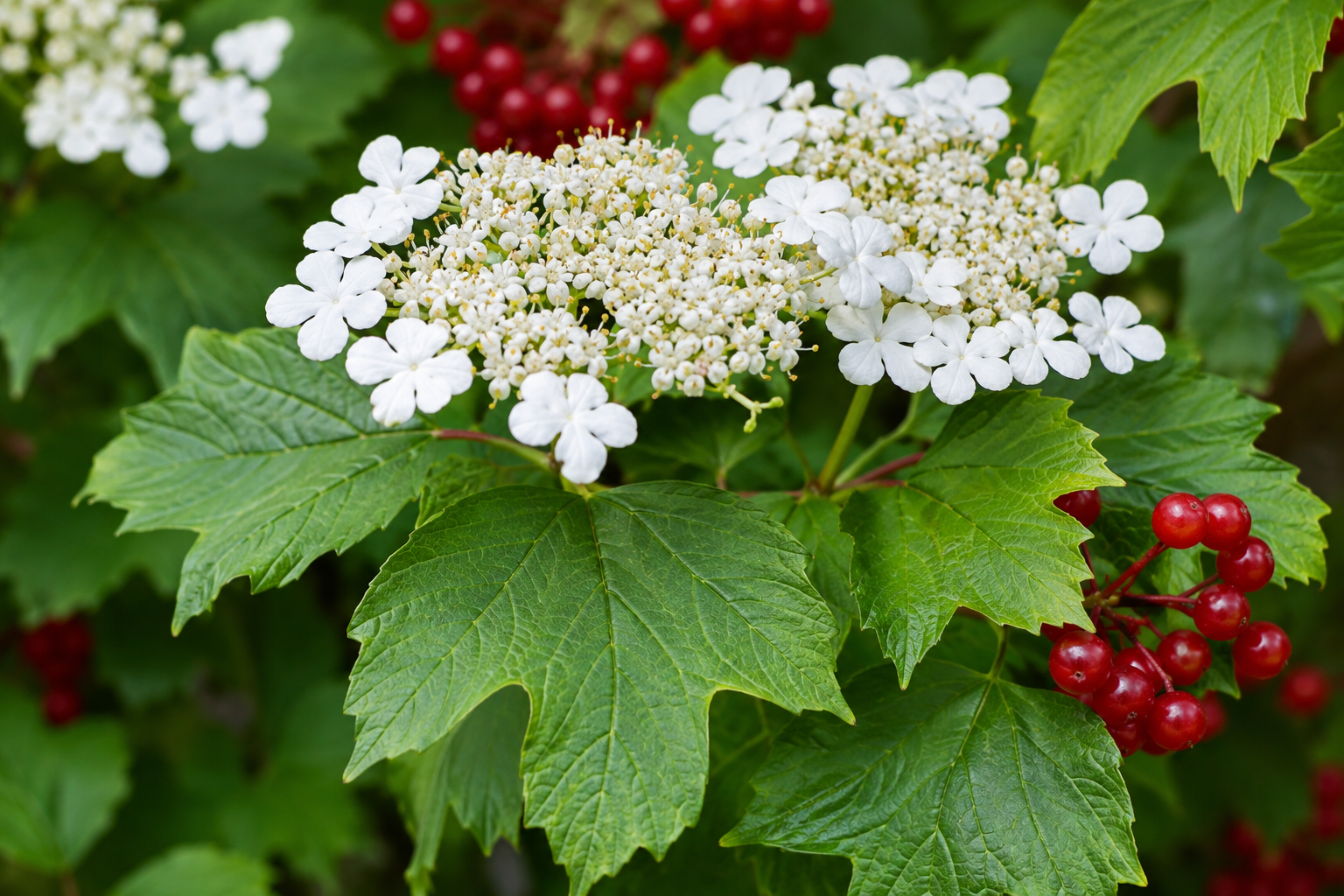
Plant Ally Profile
Viburnum opulus
Release • Rhythm • Tone • Ease
The ally that teaches the body how to loosen its grip without losing its strength.
Cramp Bark is one of the great medicines of constriction. It arrives wherever the body has clenched too tightly: the uterus twisting with pain, the low back locked in spasm, the bowel seized with colic, the bladder or bile duct caught in sharp contraction, the chest tightened by bronchial spasm, the nervous system flaring into tremor, palpitations, or convulsive tension.
This is not just an herb that “relaxes.” Cramp Bark is more subtle than that. It relaxes what is erratic, excessive, painful, or hyperexcitable, while also helping restore healthy tone where the tissue has become weak, atonic, or poorly coordinated. It is one of the classic uterine tonics, but its reach extends far beyond the womb. It speaks the language of smooth muscle, skeletal muscle, nerve impulse, and rhythm.
Its gift is release with integrity.
Cramp Bark appears in the old herbals for menstrual cramps, threatened miscarriage, afterpains, spasmodic labor pains, asthma, colic, irritable bowel, urinary spasm, back pain, neck stiffness, rheumatism, arthritis, palpitations, nervous tension, convulsions, and pains that come in waves. At the center of all of these uses is one repeating pattern: contraction has become too forceful, too painful, too defended, or too disordered.
How To Work With This Ally
Cramp Bark is most often worked with as a bark medicine, prepared as a decoction or tincture. It has a long traditional reputation as one of the leading herbs for menstrual cramps, especially when the pain is spasmodic, expulsive, bearing down, or comes in waves. It is also used for cramping that radiates into the low back, sacrum, pubic region, ovaries, or down the backs of the thighs.
It is traditionally used when there is smooth muscle spasm throughout the body: intestinal colic, irritable bowel patterns, urinary tract spasm, biliary pain, bronchial spasm, and uterine cramping. It may also be used for skeletal muscle tension, especially in the neck, back, sacrum, and spine, and for chronic tightness that seems tied to nervous stress or emotional strain.
Cramp Bark also belongs to the old midwifery tradition. Herbalists have used it for threatened miscarriage, infertility when recurrent early miscarriage related to uterine irritability or atony is a factor, cramping during pregnancy, labor preparation, erratic labor pains, afterpains, and postpartum hemorrhage formulas. These are traditional uses that require skilled clinical judgment and appropriate medical care, especially during pregnancy, labor, miscarriage, or postpartum bleeding.
One of Dr. Jill Stansbury’s most useful clinical pearls is that Cramp Bark is so reliable for uterine muscle spasm that when it fails to help menstrual pain, the practitioner should consider whether the pain is not actually primarily uterine muscle spasm. Other causes may include vascular congestion, neuralgia, endometriosis, adenomyosis, pelvic floor dysfunction, inflammatory pain, or another source of pelvic pain.
Cramp Bark appears in Daily Grind | Tincture for Teeth Grinders, where it broadens the formula beyond the teeth. In this blend, Cramp Bark helps unwind the larger pattern of muscular and nervous tension: clenching, bracing, gripping, and stress held in the body’s deep musculature.
Plant Profile
Botanical Name: Viburnum opulus
Other Species: Viburnum trilobum, Viburnum acerifolium, Viburnum prunifolium
Common Names: Cramp Bark, Gelder Rose, Guelder Rose, Highbush Cranberry, European Cranberry Bush
Family: Adoxaceae; traditionally placed in Caprifoliaceae, the Honeysuckle family
Parts Used: Bark; sometimes root bark, twigs, berries, and leaves depending on species and tradition
Energetics: Relaxing • Sour • Acrid • Cool • Bitter • Warm in some traditions • Astringent • Sedative • Tonic
Taste: Sour, acrid, bitter
Tissue State: Irritation with constriction; hot tension; spasm with hyperexcitability; weakness with poor tone
Primary Actions: Antispasmodic • Uterine tonic • Nervine • Sedative • Astringent • Analgesic • Anti-abortive • Relaxant • Musculoskeletal antispasmodic • Renal antispasmodic • Hypotensive
Traditional Uses: Menstrual cramps • Uterine spasm • Threatened miscarriage • Recurrent miscarriage • Afterpains • Labor preparation • Postpartum hemorrhage formulas • Back pain • Neck stiffness • Colic • IBS • Urinary spasm • Asthma • Bronchial spasm • Coughing spasms • Palpitations • Rheumatism • Arthritis • Convulsions • Nervous tension
Modern Research: Poorly researched compared with its traditional importance; some confusion remains between constituents of Cramp Bark and closely related Black Haw
Notable Constituents: Hydroquinones • Arbutin • Coumarins • Scopoletin • Tannins • Proanthocyanidins • Polysaccharides • Iridoid glycosides • Viburnoid • Valeric/valerenic acid
Plant Themes: Release • Tension • Rhythm • Uterine wisdom • Nervous system quieting • Spasm • Tone • The difference between strength and rigidity
Botanical Description
Cramp Bark is a deciduous shrub or small tree growing up to about 13 feet or 4 meters tall. It bears lobed leaves, white flowers, and red oval berries that brighten in autumn. In Britain and Europe, Guelder Rose has long grown in hedges, thickets, woodland margins, and borders. It was sometimes planted to mark property boundaries.
The flowers appear in broad, showy clusters, followed by red berries in late summer or autumn. The bark is traditionally harvested from branches in spring and summer while the plant is flowering, with care taken not to girdle or kill the shrub.
Species Note
The name “Cramp Bark” is more complicated than it first appears.
Many North American herbalists use Viburnum opulus and Viburnum trilobum interchangeably. Dr. John King introduced Cramp Bark under the name Viburnum opulus, the European Gelder Rose, though the Indigenous medicine being described was likely the native North American species Viburnum trilobum. Since then, the two have often been mixed in commerce.
Matthew Wood describes the European species as more acrid and the American species as more sour. He suggests that both are useful, but with a subtle distinction: the more acrid expression may better address cramping and tension, while the more sour expression may better address heat and irritation.
Black Haw, Viburnum prunifolium, is closely related and often used interchangeably with Cramp Bark. Many herbalists consider Black Haw more specifically uterine, more nutritive, and more strongly anti-abortive. Cramp Bark is often described as the broader antispasmodic, with a wider reach into the back, kidneys, bowel, bronchi, and skeletal muscles.
Robin Rose Bennett also brings in Viburnum acerifolium, Mapleleaf Viburnum. She writes that she uses the leaves and twigs in teas, tinctures, liniments, and vinegars, finding them helpful for womb congestion, knots, pain, and tight places in smooth and skeletal muscles. She prefers this species where it grows abundantly and notes that Matthew Wood told her his Native American teachers considered it the best Cramp Bark species.
The Signature of Spasm
Cramp Bark’s most obvious signature is spasm.
It is used where pain comes in waves, where muscles contract and release, contract and release, but never fully soften. The characteristic symptom can be summed up as cramping pain recurring at intervals.
This applies to the uterus, intestines, bladder, bile ducts, bronchi, skeletal muscles, and even the nervous system. The herb is repeatedly described for pain that is spasmodic, erratic, gripping, bearing down, expulsive, or convulsive.
It is not limited to one organ system because spasm is not limited to one organ system.
Cramp Bark’s genius is that it follows the pattern.
Uterine Tonic
Cramp Bark is one of the classic uterine medicines. It is traditionally used for painful menstruation, especially when cramps are spasmodic, severe, bearing down, expulsive, or associated with heaviness in the pelvis, ovaries, pubes, sacrum, low back, or thighs.
It is also used for long cycles with scanty flow and much cramping, late periods with heaviness and ovarian aching, and menstrual pain that begins before the flow. It is specific for bearing down pains and when cramps are accompanied by aching from the pubis to the thighs.
Cramp Bark is also described as a uterine tonic, meaning it can help normalize tone. This is a key distinction. It is not simply a uterine relaxant. It can reduce hyperexcitability and spasm, but it may also improve atony, weakness, and poor tone when worked with over time.
This dual action makes it useful in traditional formulas for both excessive uterine contraction and insufficient uterine tone.
Pregnancy, Miscarriage, Labor, and Postpartum Use
Cramp Bark has a long history in pregnancy and midwifery herbalism.
Traditional uses include threatened miscarriage, recurrent early miscarriage, cramping during pregnancy, vomiting of pregnancy with irritation, spasmodic labor pains, partus preparation, afterpains, and postpartum hemorrhage formulas.
Matthew Wood, drawing from Eclectic sources, notes that Cramp Bark can help prevent miscarriage from nervous irritation, though he emphasizes that Black Haw is stronger in this specific role. Ellingwood described Cramp Bark as valuable before labor as a partus preparator, though especially for its antispasmodic influence on erratic pains.
These are traditional and professional herbal uses, not casual home uses. Take it from this mama of six, pregnancy, miscarriage, labor, postpartum hemorrhage, and severe pelvic pain are emergencies and require medical care.
Menorrhagia and Uterine Atony
Cramp Bark also appears in traditional formulas for menorrhagia, especially when heavy menstrual flow is accompanied by pain and cramping.
Herbalists favor its use when heavy uterine bleeding is related to uterine atony, fibroids, hyperestrogenism, or climacteric changes. Viburnum supports healthy uterine tone and may help reduce menstrual pain. In cases of excessive flow due to atony, especially in older or nulliparous women, Cramp Bark may improve tone while reducing spasm.
The Eclectic physicians believed that Cramp Bark could help restore uterine tone over time so that the herb might eventually no longer be needed.
That is the essence of a true tonic: not just symptom relief, but restoration of function.
Smooth Muscle Beyond the Uterus
Cramp Bark’s smooth muscle affinity explains many of its traditional uses.
It has been used for:
Intestinal cramping
Colic
Irritable bowel syndrome
Constipation with spasm
Catarrhal gastrointestinal conditions with tension
Enteritis
Colitis
Dysentery
Biliary pain
Urinary tract spasm
Spasmodic stricture
Cystitis
Enuresis
Asthma
Whooping cough
Bronchitis with acute spasm
Heart palpitations
Irregular pulse
Hypertension
Musculoskeletal Tension, Back Pain, and Pinched Nerves
Cramp Bark is frequently remembered as a menstrual herb, but it is also a significant musculoskeletal antispasmodic.
It has been used for:
Low back pain
Sacral pain
Neck stiffness
Upper and lower back tension
Spinal stiffness
Old whiplash patterns
Pulled muscles
Pinched nerves
Arthritis
Rheumatism
Muscle rigidity
Chronic tightness with emotional stress
Viburnum opulus is among the most potent musculoskeletal antispasmodics for pain and muscle spasm, spinal stiffness, neck pain, and low back pain, especially when accompanied by weakness and a heavy sensation.
Nervous System and Emotional Tension
Cramp Bark is not only a muscle herb. It is also a nervine.
Older sources describe it for convulsions, hysteria, nervous troubles, fainting, epilepsy, palpitations, and spasms caused by coughing spells. The U.S. National Formulary recognized it as recently as 1960 as a sedative remedy for nervous conditions and as an antispasmodic in asthma.
It can be helpful when stress and emotional difficulty contribute to muscular tension.
This makes Cramp Bark especially useful where the nervous system and musculature are no longer separate stories: the person clenches when afraid, braces when overwhelmed, tightens around pain, or holds emotional strain in the jaw, womb, back, belly, or breath.
Kidney and Urinary Affinity
One of the more interesting threads is Cramp Bark’s affinity for the kidneys and urinary tract.
William LeSassier’s observed that Cramp Bark has a strong affinity for the kidneys and is indicated in pain, weakness, stiffness, and soreness of the lower back. LeSassier believed it strengthened weak kidneys, improved poor pumping action, supported removal of wastes, and addressed chronic debility with low-grade pain beginning in the back.
Traditional indications include spasmodic stricture in the urinary tract, cystitis, infections, and enuresis.
I use it when faced with stubborn cases of interstitial cystitis or when spasmodic pain is affecting the urinary system.
Viburnum is among the powerful renal antispasmodics, especially where urinary smooth muscle spasm is part of the clinical picture.
Respiratory Uses
Cramp Bark has a traditional place in respiratory spasm.
It has been used in asthma, whooping cough, acute bronchial spasm, and spasms caused by coughing spells. It can help to ease breathing difficulty in asthma where symptoms are complicated by excess muscle tension.
This is another expression of its smooth muscle affinity. The bronchi, like the uterus and bowel, can constrict, grip, and spasm.
Cardiovascular Uses
Cramp Bark has been used traditionally for heart palpitations, irregular pulse, high blood pressure, heart disorders, and circulatory tension. Russian tradition used the berries or bark, fresh or dried, for high blood pressure and heart disease. Traditional hypotensive use suggests it may have relaxing effects on striated as well as smooth muscle types.
It must be used cautiously in patients with a history of low blood pressure, as its hypotensive potential should be respected.
Digestive and Biliary Uses
Cramp Bark may be useful where digestion is constricted by spasm.
Traditional and professional indications include nervous indigestion, flatulence, stomach cramps, colic, sudden abdominal cramps, painful intestinal cramping, IBS, constipation, enteritis, colitis, dysentery, and biliary pain.
This is Cramp Bark acting again as a smooth muscle antispasmodic, relieving painful contraction in the digestive and biliary passages.
Fever, Heat, and the Sour-Acrid Mystery
Matthew Wood describes Cramp Bark as sour, acrid, and cool, suited to irritation and constriction. He notes that plants in the old Honeysuckle family often address heat, and that Cramp Bark’s combination of sour and acrid flavors is unusual.
Sour cools, tightens, and clarifies.
Acrid moves, disperses, and releases.
Together they address hot tension: tissues that are irritated, contracted, and overreactive.
Wood also notes traditional use in fever, saying Cramp Bark brings blood to the skin and balances pH. This cooling, dispersing quality should not be forgotten, especially when spasm is accompanied by irritation and heat.
Constituents and Research
Cramp Bark remains under-researched in comparison to its long traditional use.
Reported constituents include hydroquinones, arbutin, coumarins, scopoletin, tannins, proanthocyanidins, polysaccharides, iridoid glycosides, viburnoid, and valeric or valerenic acid in traditional sources.
Iridoid glycosides, viburnoid, and scopoletin contribute to antispasmodic effects. Scopoletin is an effective smooth muscle antispasmodic that can act quickly to bring pain relief.
Safety
The Botanical Safety Handbook lists Viburnum opulus as a Class 1 herb, meaning it can be safely consumed when used appropriately. Avoid use in hypotensive conditions.
Esoteric Correspondences
♄ Saturn • ☽ Moon
🜄 Water • 🜃 Earth
Themes: Constriction • Release • Boundaries • Rhythm • Tension • Time • The wisdom of softening
Applications: Cramping • Rigidity • Chronic holding • Uterine pain • Nervous tension • Spinal stiffness • Emotional bracing • Restoring tone after collapse or excess contraction
The correspondence with Saturn is quite telling. Saturn governs constriction, structure, stiffness, boundaries, chronicity, and the places where life becomes hardened by time, fear, pressure, or over-control.
The Moon is also present, especially through the uterus, fluids, cycles, pregnancy, afterbirth, and the watery intelligence of the reproductive body. But Saturn appears to be the governing planet of the plant’s deeper teaching: release the grip, restore the rhythm, keep the form.
Plant Teaching: Release without collapse.
References
Bennett, Robin Rose. The Gift of Healing Herbs: Plant Medicines and Home Remedies for a Vibrantly Healthy Life.
Beyerl, Paul. The Book of Herbalism.
Chevallier, Andrew. Encyclopedia of Herbal Medicine.
Easley, Thomas, and Steven Horne. The Modern Herbal Dispensatory: A Medicine-Making Guide.
McGuffin, Michael, et al., eds. Botanical Safety Handbook.
Stansbury, Jill. Herbal Formularies for Health Professionals, Volume 1: Digestion and Elimination.
Stansbury, Jill. Herbal Formularies for Health Professionals, Volume 3: Endocrinology.
Stansbury, Jill. Herbal Formularies for Health Professionals, Volume 5: Immunology, Orthopedics, and Otolaryngology.
Tierra, Michael. The Way of Herbs.
Weed, Susan. Wise Woman Herbal for the Childbearing Year.
Wood, Matthew. The Earthwise Herbal, Volume 2: A Complete Guide to New World Medicinal Plants.
