Meet Lavender
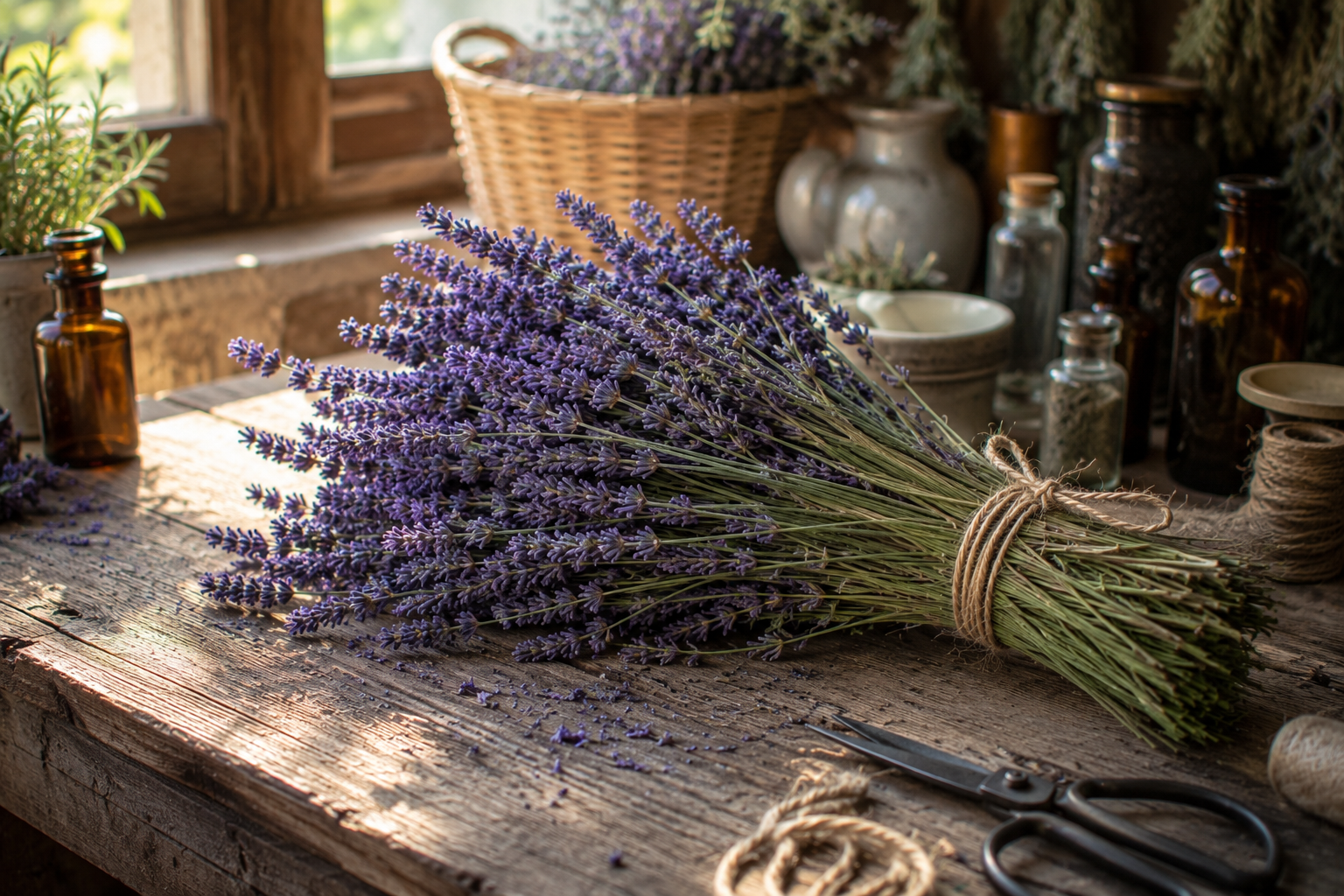
Plant Ally Profile
Lavandula angustifolia
Calm • Restoration • Emotional Balance • Sleep • Peace
The flower of calm, restoration, and gentle clarity.
Lavender (Lavandula angustifolia) reminds us how to rest in the present moment.
With her silver-green foliage and violet blossoms, Lavender has been cultivated for centuries for beauty, fragrance, and medicine. Her name is believed to derive from the Latin lavare, meaning "to wash," reflecting its long association with purification, bathing, and renewal.
Lavender has accompanied human beings for centuries as both medicine and fragrance. The ancient Greeks, Romans, and later Arabic physicians valued Lavender for its effects on the nervous system, digestion, and overall vitality. Its name is thought to derive from the Latin lavare, meaning "to wash," reflecting its long association with purification, bathing, sacred space, and renewal.
But Lavender's gifts extend far beyond a pleasant scent.
Herbalists have long turned to Lavender for headaches, nervous tension, sleeplessness, digestive discomfort, and emotional distress. The seventeenth-century herbalist John Parkinson described Lavender as being of "special good use for all griefs and pains of the head and brain," a sentiment that continues to resonate with many modern practitioners.
Across traditions, she has been used to soothe the nervous system, ease tension, encourage restful sleep, and support emotional balance. Her aromatic flowers have found their way into teas, tinctures, oils, sachets, baths, incense, and countless rituals intended to bring peace to both body and mind.
Lavender teaches us that not everything requires effort.
She appears when the mind has become crowded and the nervous system has forgotten how to rest. She softens the grip.
She gives permission to release the unnecessary tension we carry in our bodies, our thoughts, and our expectations of ourselves.
Peace arrives not when everything is finished, but when we stop holding everything so tightly.
Lavender occupies a rare place among herbal allies.
She is calming without being sedating. Relaxing without diminishing awareness. Gentle, yet remarkably effective.
Her medicine often feels like an exhale.
A softening of the shoulders. A release of unnecessary tension. A return to center.
In a culture that often celebrates busyness, Lavender reminds us that restoration is productive in its own right.
How To Work With This Ally
Lavender may be especially supportive during seasons of stress, overwhelm, restlessness, or emotional fatigue.
A cup of lavender tea can become a simple evening ritual. A few drops of lavender-infused oil may transform an ordinary bath into an act of restoration. The fragrance lends itself beautifully to meditation, prayer, sleep rituals, and moments when the nervous system is asking for gentleness.
For me, Lavender is a reminder that we do not always need to push harder. She simply supports conditions in which healing can occur.
Lavender pairs beautifully with Blue Vervain in Plant Alchemy’s Nervine No. 9, where her calming, aromatic nature helps soften tension while Blue Vervain encourages release of mental and emotional overexertion.
Plant Profile
Botanical Name:Lavandula angustifolia
Family: Lamiaceae (Mint Family)
Parts Used: Flowers • Flowering tops • Essential oil
Energetics: Cooling • Aromatic • Relaxing • Drying • Dispersing
Primary Actions: Nervine • Nervine relaxant • Aromatic • Carminative • Antispasmodic • Mild antidepressant • Anodyne • Anti-inflammatory • Antimicrobial • Vulnerary • Hepatic (mild) • Circulatory stimulant
Traditional Uses: Stress support • Nervous tension • Anxiety • Mental overactivity • Restless sleep • Nervous exhaustion • Headaches • Migraines • Neck and shoulder tension • Digestive cramping • Gas and bloating • Colic • Motion sickness • Nervous dyspepsia • Poor appetite • Palpitations associated with stress • Burns and sunburn • Insect bites and stings • Eczema • Allergic dermatitis • Poison ivy and poison oak reactions • Fungal skin infections • Scabies and lice • Halitosis • Wound support • Neuralgia
What Modern Research Shows: Research supports Lavender's traditional use for anxiety, mood support, sleep, and nervous system regulation. A 2014 clinical trial found orally administered lavender oil to be more effective than placebo and comparable to a conventional tranquilizer for relieving generalized anxiety. Additional studies have demonstrated relaxant, antidepressant, and gently sedative effects. Lavender's volatile oils also exhibit significant antimicrobial activity, supporting its longstanding use for minor burns, wounds, and skin support.
Safety: Class 1 (Botanical Safety Handbook), generally recognized as safe when used appropriately. Lavender is well tolerated by most individuals. Rare sensitivity reactions may occur. Some sources note mild estrogenic activity, suggesting caution with concentrated preparations in adolescent males.
Notable Constituents: Volatile oils • Linalool • Linalyl acetate • Cineole • Pinene • Limonene • Geraniol • Borneol • Flavonoids • Coumarins • Triterpenes • Tannins
Plant Themes: Calm • Restoration • Harmony • Release • Emotional Balance • Clarity • Peace • Renewal • Gentle Awareness • Returning to Center
Esoteric Correspondences
Mercury ☿ • Virgo ♍ • Air 🜁
Themes: Purification • Blessing • Stability • Sacred Space • Peace • Clarity • Consecration • Fidelity • Emotional Balance • Higher Awareness • Protection • Restoration • Harmonization • Spiritual Cleansing • Returning to Center
Love • Protection • Peace • Purification • Sleep • Happiness • Chastity • Fidelity • Home Blessing • Sacred Space Creation • Meditation • Dreamwork • Wish Magic • Longevity • Healing • Emotional Balance • Prosperity • Baby Blessings • Marriage Blessings • Midsummer Rituals • Consecration • Spiritual Protection
Plant Teaching: Peace is not something we find. It is something we allow.
References
Beyerl, Paul. The Master Book of Herbalism.
Chevallier, Andrew. Encyclopedia of Herbal Medicine.
Cunningham, Scott. Cunningham's Encyclopedia of Magical Herbs.
Easley, Thomas & Horne, Steven. The Modern Herbal Dispensatory: A Medicine-Making Guide.
Grieve, M. A Modern Herbal.
Harrison, Karen. The Herbal Alchemist's Handbook.
McGuffin, Michael, et al. Botanical Safety Handbook.
Stansbury, Jill. Herbal Formularies for Health Professionals, Volume 1: Digestion and Elimination.
Wood, Matthew. The Earthwise Herbal, Volume 1: A Complete Guide to Old World Medicinal Plants.
This profile reflects both traditional herbal knowledge and modern scientific understanding. It is intended for educational purposes and should not replace individualized medical advice. As with all herbal medicines, consider the whole person, their health history, and appropriate safety precautions before use.
