Meet Lemon Balm
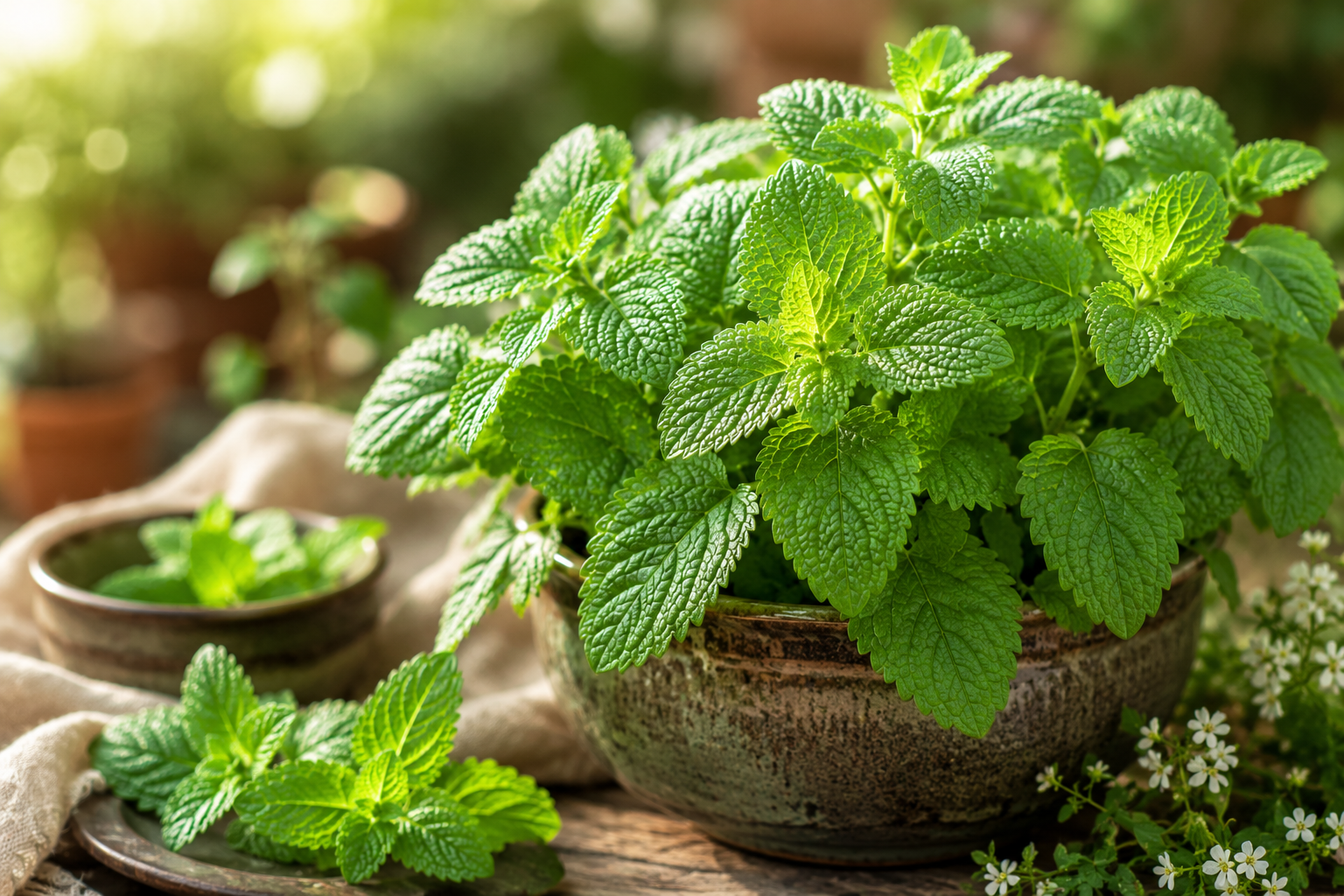
Plant Ally Profile
Melissa officinalis
Calm • Clarity • Joy • Ease • Restoration • Receptivity
The herb that lifts the heart and clears the mind.
Lemon Balm has spent centuries lifting heavy hearts and brightening weary minds.
For more than two thousand years, herbalists have turned to this fragrant member of the mint family to comfort anxious minds, help heavy spirits, settle nervous stomachs, and restore gentle sleep. Medieval monasteries distilled it into the famous Carmelite Water. European households kept bottles of Spirit of Melissa within easy reach. John Evelyn praised its ability to "chase away melancholy," echoing even earlier herbalists who believed it strengthened the memory while comforting the heart.
Modern research continues to affirm many of these traditional observations. Lemon Balm has demonstrated calming effects on the nervous system, supports healthy cognitive function and memory, and possesses impressive antiviral activity, particularly against herpes simplex viruses. Yet its medicine extends beyond any single body system.
Herbalists often notice that stress rarely stays in one place. It becomes a racing mind, a fluttering heart, a clenched jaw, an unsettled stomach, poor sleep, recurrent cold sores, or simple exhaustion after carrying too much for too long. Lemon Balm seems to appear wherever tension has become embodied.
She is especially beloved because she calms without clouding the mind.
Instead, many people experience greater mental clarity, improved concentration, brighter mood, and a renewed ability to engage with life. It is no coincidence that she has long been called “the scholar's herb”, praised for supporting memory and clear thinking while easing worry.
For me, Lemon Balm feels like permission to exhale.
How to Work With This Ally
Lemon Balm may be especially supportive during periods of stress, anxiety, emotional overwhelm, nervous digestion, difficulty sleeping, or when your thoughts refuse to settle.
She is equally at home as a daily beverage tea, fresh tincture, glycerite, or topical preparation for cold sores. Fresh preparations are especially prized by many herbalists because the delicate aromatic oils are best preserved before drying.
Her bright, lemony flavor makes her one of the most approachable medicinal herbs for daily use.
Lemon Balm appears in Daily Grind Tea and Tincture, where she helps soften the underlying nervous tension that often shows itself through jaw clenching, restless sleep, and an overactive mind. She also appears in Groundworks, where her calming influence supports healthy digestion by addressing the intimate relationship between the nervous system and the gut.
Plant Profile
Botanical Name:Melissa officinalis
Family: Lamiaceae (Mint Family)
Parts Used: Leaf, flowering aerial parts
Energetics: Cooling • Slightly Drying • Aromatic • Relaxing
Primary Actions: Nervine • Carminative • Antiviral • Antispasmodic • Mild Sedative • Diaphoretic
Traditional Uses: Anxiety • Melancholy • Nervous indigestion • Sleep support • Memory • Palpitations • Cold sores • Fever • Digestive upset
Modern Research: Research supports Lemon Balm's traditional use for mild anxiety, stress-related insomnia, cognitive function, memory, and mood. Clinical studies also support its topical use for recurrent herpes simplex infections, where it has been proven to shorten healing time and reduce recurrence. Emerging evidence continues to explore its antiviral, neuroprotective, anti-inflammatory, antioxidant, thyroid-modulating, and gastrointestinal effects. Increasingly, clinicians also employ Lemon Balm in formulas addressing functional digestive disorders, stress-related IBS, nervous dyspepsia, and conditions where chronic sympathetic activation contributes to illness.
Notable Constituents: Rosmarinic acid • Citral • Citronellal • Linalool • Caryophyllene oxide • Flavonoids • Polyphenols • Triterpenes • Tannins
Plant Themes: Calm • Clarity • Joy • Emotional Resilience • Adaptability • Comfort • Memory • Restoration
Esoteric Correspondences
♀ Venus • ☽ Moon • 🜄 Water
Love • Peace • Emotional Healing • Attraction • Comfort • Receptivity • Happiness • Abundance
Applications: Softening emotional tension • Supporting meditation and prayer • Encouraging loving connection • Navigating life transitions • Cultivating inner peace • Opening space for healing and gentle transformation
Plant Teaching:A light heart sees farther than a troubled mind.
References
Bennett, Robin Rose. The Gift of Healing Herbs: Plant Medicines and Home Remedies for a Vibrantly Healthy Life.
Beyerl, Paul. The Master Book of Herbalism.
Chevallier, Andrew. Encyclopedia of Herbal Medicine.
Diaz, Juliet. Plant Witchery: Discover the Sacred Language, Wisdom, and Magic of 200 Plants.
Dunbar, Jo. Secrets from an Herbalist's Garden.
Easley, Thomas & Horne, Steven. The Modern Herbal Dispensatory: A Medicine-Making Guide.
Libster, Martha M. The Nurse Herbalist: Integrative Insights for Holistic Practice.
McGuffin, Michael, et al., eds. American Herbal Products Association Botanical Safety Handbook.
Plants of the World Online. Royal Botanic Gardens, Kew.
Stansbury, Jill. Herbal Formularies for Health Professionals, Volume 1: Digestion and Elimination.
Weed, Susun. Wise Woman Herbal for the Childbearing Year.
Winston, David. Adaptogens: Herbs for Strength, Stamina, and Stress Relief.
Wood, Matthew. The Earthwise Herbal, Volume I: A Complete Guide to Old World Medicinal Plants.
