Meet Mugwort
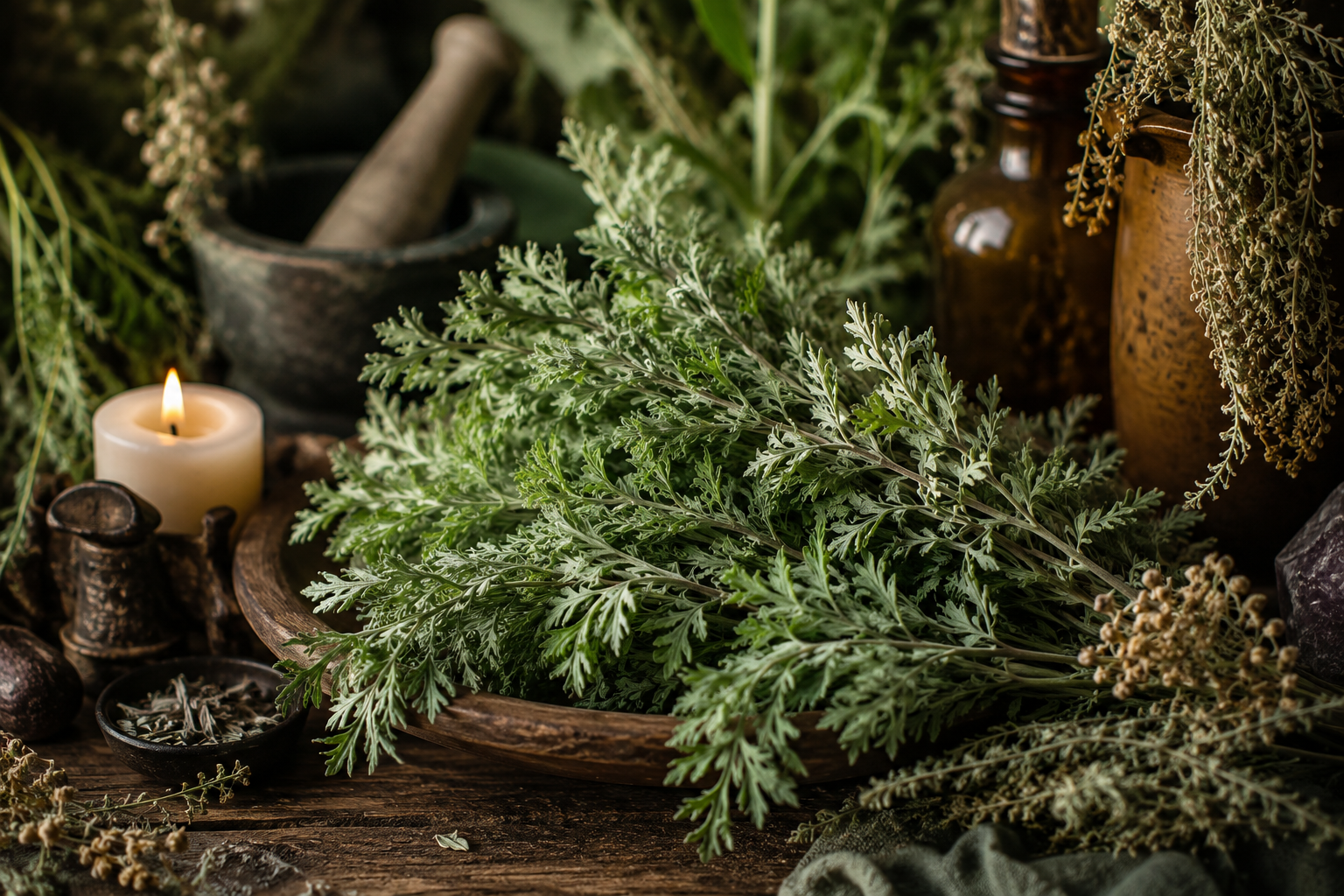
Plant Ally Profile
Artemisia vulgaris
Dreaming • Intuition • Remembrance • Thresholds • Vision
A botanical guide for those learning to listen to what lies beneath the surface.
There are certain plants that exist at the edge of ordinary awareness. They make their home in the liminal spaces…along roadsides, abandoned fields, and forgotten places. Easily overlooked, they offer extraordinary medicine to those with eyes to see.
Mugwort is one of those plants.
Known to the Anglo-Saxons as the “Eldest of Worts” and honored for centuries throughout Europe and Asia, Mugwort has long accompanied midwives, healers, travelers, dreamers, and seekers. She is a women’s herb. A plant of digestion and circulation, of the nervous system and the womb, of dreams and intuition. Yet beneath all of these traditional uses runs a quieter current. Mugwort has an uncanny ability to help us remember.
She reminds the body how to move again, awakening digestion, encouraging healthy menstrual flow, and warming places where cold has lingered. She supports the body's natural rhythms and transitions. And in the spaces between waking and sleep, she gently illuminates the symbolic language through which the unconscious often speaks.
For centuries she has been associated with prophecy, dreaming, divination, and inner vision. Modern herbalists continue to value her for digestive support, nervous system nourishment, menstrual wellness, and moxibustion, while many who work spiritually know her as a patient guide through meditation, dreamwork, ritual, and personal transformation.
Mugwort so often appears at life's thresholds. She accompanies birth and menopause, illness and healing, waking and dreaming, endings and beginnings. She reminds us that intuition is our superpower, when we are attuned to it.
How to Work With This Ally
Mugwort is traditionally prepared as a tea, tincture, vinegar, smoke blend, ritual bath, compress, or as the dried herb used in moxibustion. Young spring leaves have also been enjoyed as a traditional food in several cultures.
Her bitter, aromatic nature makes her especially valuable before meals to encourage digestive secretions, healthy bile flow, and nutrient assimilation. Evening preparations are used to support dreaming, deep reflection, and inner work.
Those drawn to Mugwort often find themselves entering seasons of transition. Journaling after dreams, quiet meditation, contemplative walks, ritual bathing, and intentional time in nature all pair beautifully with her medicine.
Mugwort appears in DreamWeaver, where she works alongside Calea and other botanical allies to support dreaming, symbolic insight, and the gentle translation of unconscious experience into conscious understanding.
Plant Profile
Botanical Name:Artemisia vulgaris
Family: Asteraceae
Parts Used: Leaf • Flowering Tops
Energetics: Bitter • Aromatic • Slightly Warming • Drying
Primary Actions: Bitter tonic • Aromatic digestive • Uterine tonic • Uterine Stimulant • Nervine • Cholagogue • Emmenagogue • Mild diaphoretic • Mild diuretic • Vermifuge
Traditional Uses: Digestive weakness • Poor appetite • Liver support • Nervous tension • Dream support • Menstrual discomfort • Hormonal balance • Cold stagnation • Moxibustion • Intestinal parasites
Modern Research: Modern investigation supports Mugwort's traditional use as a bitter digestive herb that stimulates digestive secretions and bile flow. Research has also explored its volatile oils, flavonoids, sesquiterpene lactones, triterpenes, and coumarins, which contribute to its aromatic, antioxidant, and digestive properties. Contemporary herbalists continue to value Mugwort for digestive function, nervous system support, menstrual wellness, and as the primary herb used in traditional moxibustion. Because of thujone-containing volatile oils, concentrated preparations and essential oil require appropriate caution.
Notable Constituents:Volatile oils (including thujone and caryophyllene) • Sesquiterpene lactones • Flavonoids • Coumarins • Triterpenes • Bitter principles
Safety
Avoid therapeutic use during pregnancy because of Mugwort's traditional emmenagogue and uterine-stimulating actions. Individuals with seizure disorders should avoid concentrated preparations due to thujone-containing volatile oils. The essential oil should not be taken internally. Those with sensitivities to plants in the Asteraceae family may experience allergic reactions.
Plant Themes
Dreaming • Remembering • Intuition • Translation • Thresholds
Esoteric Correspondences
☽ Moon • ♆ Neptune
🜄 Water
Dreamwork • Meditation • Visioning • Ritual Bathing • Divination • Threshold Work
Across magical and folk traditions, Mugwort has also been associated with Venus and Earth. Like many ancient herbs, her symbolic correspondences vary across cultures and lineages, though her enduring relationship with the Moon, dreaming, and intuition remains remarkably consistent.
Plant Teaching
"Listen for the language beneath words. Learn the language of your own soul."
Species Note
Several closely related species are commonly referred to as Mugwort, including Artemisia vulgaris, A. douglasiana, and A. lactiflora. While they share many traditional applications, this profile focuses primarily on Artemisia vulgaris, the species most widely used in Western herbalism and European folklore.
References
Bennett, R. R. The Gift of Healing Herbs: Plant Medicines and Home Remedies for a Vibrantly Healthy Life.
Beyerl, P. The Master Book of Herbalism.
Chevallier, A. Encyclopedia of Herbal Medicine.
Cunningham, S. Cunningham's Encyclopedia of Magical Herbs.
Diaz, J. Plant Witchery.
Dunbar, J. Secrets from an Herbalist's Garden: A Magical Year of Plant Remedies.
Dunwich, G. Herbal Magick: A Guide to Herbal Enchantment, Folklore, and Divination.
Garrett, J. T., & Garrett, M. T. The Cherokee Herbal: Native Plant Medicine from the Four Directions.
Harrison, K. The Herbal Alchemist's Handbook: A Complete Guide to Magical Herbs and How to Use Them.
McGuffin, M., et al. Botanical Safety Handbook.
Stansbury, J. Herbal Formularies for Health Professionals, Volume 1: Digestion and Elimination.
Tierra, M. The Way of Herbs.
Weed, S. Wise Woman Herbal for the Childbearing Year.
Wood, M. The Earthwise Herbal: A Complete Guide to Old World Medicinal Plants.
