Camellia Seed Oil
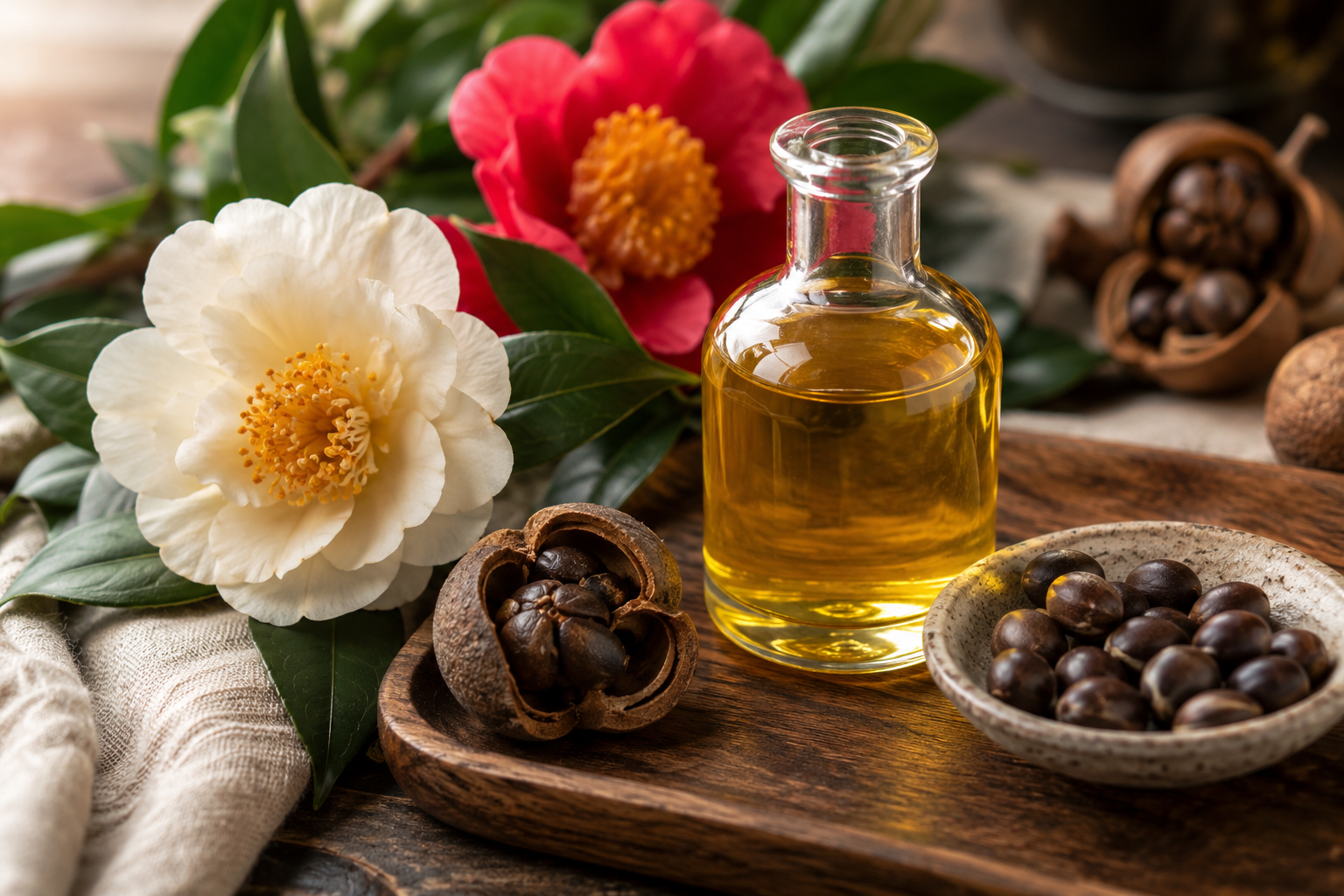
A botanical oil of remarkable elegance, Camellia Seed Oil has been treasured for centuries throughout East Asia. It is used extensively in Korean and Japanese skincare as both a beauty ritual and a daily skin protectant. Rich in oleic acid, naturally occurring antioxidants, and skin-compatible lipids, it nourishes the skin with exceptional softness while supporting barrier function, resilience, and lasting suppleness.
Identity Card
Botanical Name
Camellia oleifera (primarily), with related oils also produced from Camellia japonica and Camellia sinensis seeds.
Plant Family
Theaceae
Plant Part
Seeds
Native Range
China, Japan, Korea, Taiwan, and other regions of East Asia
Extraction Method
Cold-pressed (preferred); occasionally refined for cosmetic applications
INCI Name
Camellia Oleifera Seed Oil
Primary Lipids
Oleic Acid • Linoleic Acid • Palmitic Acid • Stearic Acid
Key Constituents
Tocopherols • Phytosterols • Polyphenols • Squalene • Flavonoids • Triterpenoids
Skin Feel
Silky • Cushioned • Satin-like
Absorption
Moderate to Rapid
Oxidative Stability
High
Shelf Life
Approximately 18 to 24 months when stored properly
Common Uses
Facial oils • Botanical serums • Cleansing oils • Moisturizers • Hair oils • Beard oils • Massage oils
Primary Actions
Barrier Support • Emollient • Skin Conditioning • Antioxidant • Moisture Retention • Anti-inflammatory
At a Glance
Best For:
Dry skin
Mature skin
Sensitive skin
Compromised skin barrier
Seasonal dryness
Facial massage
Hair and scalp care
Botanical cleansing oils
Pairs Well With:
Rosehip Seed Oil
Prickly Pear Seed Oil
Jojoba Oil
Argan Oil
Meadowfoam Seed Oil
Squalane
Plant Alchemy Formulations
Veil | Active Botanical Facial Serum
Camellia Seed Oil forms the elegant heart of Veil, lending its silky texture, exceptional glide, and skin-compatible lipids to support barrier function while carrying the serum's active botanical oils deep into the skin. Its naturally high oleic acid content leaves the complexion soft, supple, and luminous without feeling heavy.
Altar | Botanical Beard + Skin Oil
In Altar, Camellia Seed Oil softens coarse beard hair while conditioning the skin beneath. Its lightweight, satin finish helps tame flyaways, reduce dryness, and support a healthy skin barrier, making it equally at home on the face, beard, and neck.
Botanical Background
Camellia Seed Oil is pressed from the seeds of evergreen trees and shrubs within the Camellia genus, members of the tea family (Theaceae). While several species produce valuable oils, Camellia oleifera is the primary source for cosmetic and culinary oil production, with Camellia japonica and Camellia sinensis also contributing to regional traditions and specialty preparations.
Native to East Asia, camellias have been cultivated for thousands of years throughout China before spreading into Japan and Korea, where they became deeply woven into both daily life and traditional beauty practices. Although the leaves of Camellia sinensis gave the world tea, the seeds of several Camellia species have long yielded a remarkably stable, nutrient-rich oil prized for its versatility and exceptional skin feel.
Camellia plants produce glossy evergreen foliage and elegant flowers ranging from pure white to deep crimson. Following flowering, woody seed capsules develop over many months before splitting open to reveal the oil-rich seeds within. These mature seeds are harvested, dried, and cold-pressed to produce the golden oil valued in both skincare and culinary traditions.
Prized for its exceptionally high oleic acid content and excellent oxidative stability, Camellia Seed Oil occupies a unique place among botanical oils. It combines the rich nourishment associated with high-oleic oils with an unexpectedly light, silky finish, making it equally suited to facial care, hair care, and modern cosmetic formulation.
Traditional Use
For centuries, Camellia Seed Oil has been a cherished part of daily life throughout East Asia, where it has been valued as both a nourishing food and a beauty oil. Historical records describe its use in China as a cooking oil, medicinal remedy, and skin protectant, while in Japan and Korea it became especially renowned for preserving the health and beauty of the skin and hair.
In Japan, Camellia Seed Oil, known as tsubaki oil, has long been associated with graceful, healthy hair. Women traditionally applied the oil to smooth the hair shaft, protect against environmental damage, and impart a lasting shine without heaviness. Wooden combs were often conditioned with camellia oil before grooming, allowing a thin layer of oil to be distributed evenly through the hair while helping preserve the wood itself. Over generations, the oil became closely linked with the polished appearance of geisha, kabuki performers, and others whose elaborate hairstyles required both strength and softness.
Across Korea, Camellia Seed Oil likewise earned a reputation as a luxurious yet practical beauty oil. Rich enough to comfort dry skin while remaining remarkably lightweight, it was incorporated into traditional skincare and hair care rituals long before the rise of modern K-beauty. Today, its elegant sensory profile and naturally high concentration of skin-compatible lipids continue to make it a favorite ingredient in premium Korean skincare formulations.
Although modern research now explains many of Camellia Seed Oil's antioxidant, moisturizing, and barrier-supportive properties, its enduring reputation was built through centuries of observation. Long before scientists identified oleic acid, tocopherols, phytosterols, and polyphenols, people recognized that this botanical oil left skin soft, hair luminous, and both better protected from the effects of time and environment.
Extraction & Processing
Camellia Seed Oil is obtained by pressing the mature seeds found within the woody capsules of Camellia species after they have fully ripened. Once harvested, the seeds are cleaned, dried to reduce moisture, and mechanically pressed to release their naturally lipid-rich oil. For premium cosmetic applications, cold pressing is the preferred extraction method because it preserves the oil's delicate unsaponifiable compounds, including tocopherols, phytosterols, polyphenols, and squalene.
After pressing, the oil may be lightly filtered to remove suspended plant particles while retaining its naturally occurring bioactive constituents. Higher-volume commercial oils may undergo refining to improve color, odor, and shelf stability. Although refining creates a more neutral oil for large-scale manufacturing, it can also reduce some of the minor antioxidant compounds that contribute to the oil's therapeutic value. For botanical skincare, minimally processed, cold-pressed oils are generally preferred for their richer phytochemical profile.
Camellia Seed Oil is naturally rich in monounsaturated fatty acids, particularly oleic acid, which contributes not only to its nourishing properties but also to its excellent oxidative stability. Unlike more fragile polyunsaturated oils that require careful formulation to slow oxidation, Camellia remains comparatively stable during storage while maintaining its characteristic silky texture and elegant skin feel. This balance of stability and performance has made it a favorite among formulators seeking a luxurious botanical oil with dependable shelf life.
The quality of the finished oil depends on several factors, including the Camellia species, growing conditions, seed maturity, extraction temperature, and post-processing methods. Fresh, properly stored, cold-pressed oil typically ranges from pale gold to light amber and carries only a faint, clean aroma, reflecting its minimal processing and suitability for high-performance facial formulations.
Lipid Composition
The remarkable performance of Camellia Seed Oil begins with its lipid profile. Unlike many botanical oils prized for their high linoleic acid content, Camellia is dominated by oleic acid, a monounsaturated omega-9 fatty acid that closely resembles the lipids naturally found within the skin's protective barrier. This composition gives the oil its signature silky texture, exceptional spreadability, and ability to soften the skin without leaving a heavy or greasy residue.
Although oleic acid is its defining constituent, Camellia Seed Oil contains a balanced spectrum of saturated and unsaturated fatty acids that work together to nourish, condition, and protect the skin. Smaller amounts of linoleic acid contribute to barrier function, while palmitic and stearic acids provide additional emollience and help reinforce the skin's natural lipid matrix.
The precise fatty acid profile varies slightly depending on the Camellia species, growing conditions, and extraction method, but high-quality cold-pressed Camellia Seed Oil consistently contains an exceptionally high proportion of oleic acid, contributing to both its luxurious sensory profile and excellent oxidative stability.
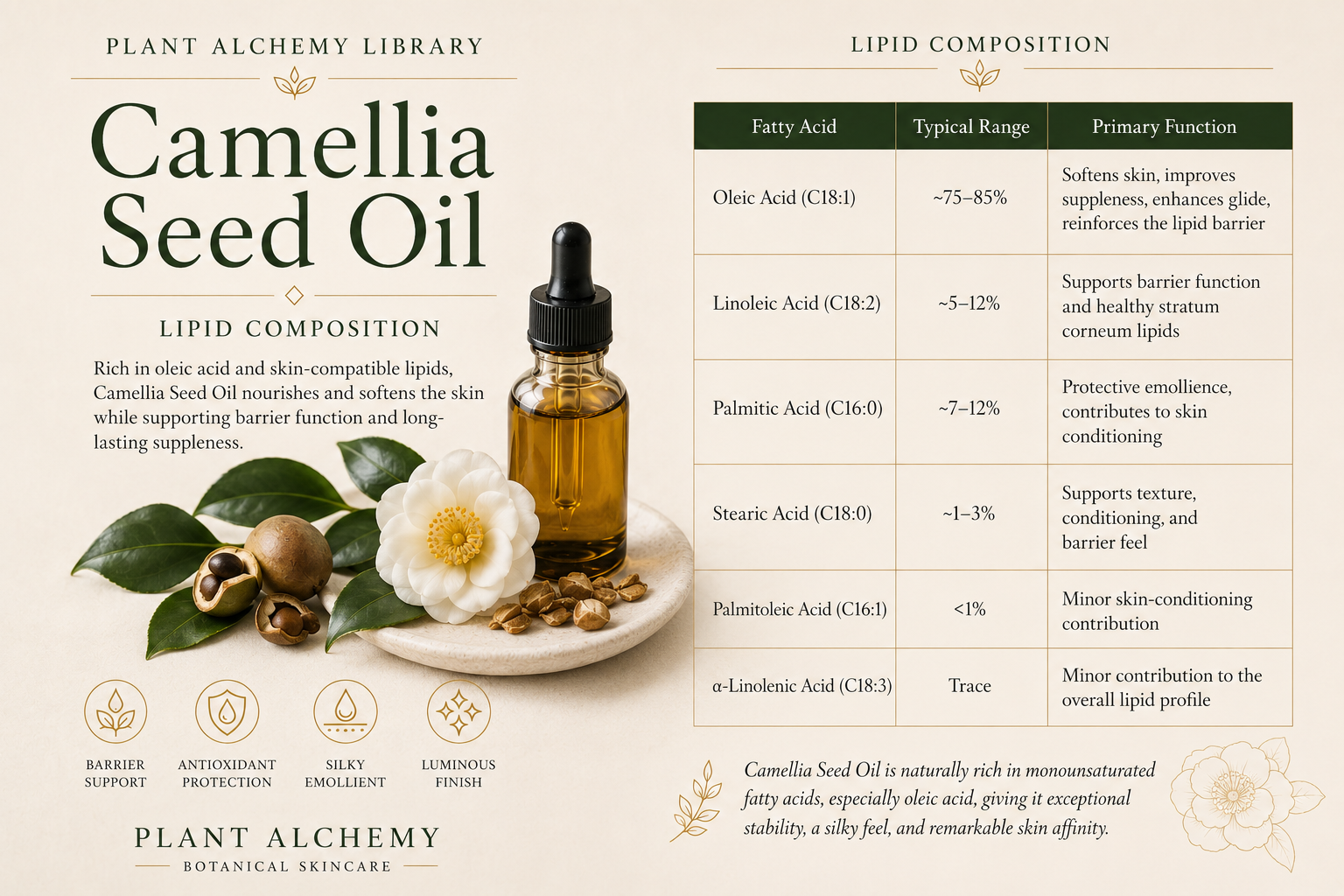
Together, these fatty acids create an oil that feels both elegant and deeply nourishing. Rather than simply coating the skin, Camellia Seed Oil integrates readily with the skin's own lipid environment, leaving behind a smooth, satin finish that has made it a treasured ingredient in facial oils, hair care, and luxury botanical formulations for centuries.
Unsaponifiable Constituents
While fatty acids comprise the majority of Camellia Seed Oil, a small but biologically important fraction remains unsaponifiable, meaning these compounds are not converted into soap during saponification. Although they make up only a small percentage of the oil, these naturally occurring phytochemicals contribute significantly to its antioxidant activity, skin-conditioning properties, and overall performance in botanical skincare.
Tocopherols
Camellia Seed Oil naturally contains tocopherols, members of the vitamin E family that help protect both the oil and the skin from oxidative damage. As potent lipid-soluble antioxidants, tocopherols help neutralize free radicals generated by ultraviolet radiation and environmental stress while also improving the oxidative stability of the oil itself. Their presence contributes to the oil's ability to support healthy skin aging and maintain a resilient skin barrier.
Phytosterols
Plant sterols are naturally occurring lipids that closely resemble cholesterol, one of the essential components of the skin barrier. In topical formulations, phytosterols help support barrier recovery, improve skin comfort, and reduce visible dryness by reinforcing the skin's own lipid matrix. They are also recognized for their soothing properties and may help calm irritation associated with environmental stress.
Polyphenols
Although Camellia leaves are best known for their abundant polyphenols, the seeds also contain valuable phenolic compounds that contribute antioxidant and anti-inflammatory activity. These molecules help defend the skin against oxidative stress while supporting overall skin health and resilience. Research suggests they work synergistically with the oil's fatty acids and tocopherols to provide broader protection than any single constituent alone.
Squalene
Camellia Seed Oil contains naturally occurring squalene, a lipid that is also produced by healthy human skin. As a lightweight emollient, squalene enhances softness, improves skin flexibility, and helps reduce moisture loss while contributing to the oil's distinctive silky feel. It also possesses antioxidant properties that further support the skin's defense against environmental stressors.
Flavonoids & Triterpenoids
Minor constituents including flavonoids and triterpenoids further contribute to Camellia Seed Oil's antioxidant and soothing properties. While present in relatively small quantities, these compounds add to the oil's complex phytochemical profile and may play supporting roles in reducing inflammation and maintaining healthy skin function.
Together, these unsaponifiable constituents transform Camellia Seed Oil from a simple emollient into a sophisticated botanical ingredient. Working alongside its exceptionally high oleic acid content, they help explain why this elegant oil has remained a cornerstone of traditional beauty rituals and continues to earn a place in modern, science-informed skincare formulations.
Skin Physiology & Mechanisms of Action
Camellia Seed Oil supports the skin through multiple complementary mechanisms. Rather than acting as a simple surface emollient, its fatty acids and naturally occurring phytochemicals work together to reinforce the skin barrier, reduce moisture loss, defend against oxidative stress, and calm inflammation. The result is skin that feels softer, more resilient, and better able to maintain its own healthy function.
Barrier Support & Moisture Retention
The skin's outermost layer, the stratum corneum, relies on a carefully balanced mixture of lipids to prevent excessive water loss while protecting against environmental irritants. Camellia Seed Oil's exceptionally high oleic acid content helps replenish these surface lipids, improving suppleness and reducing transepidermal water loss (TEWL). Studies have consistently demonstrated excellent moisturizing and moisture-retention properties, making the oil particularly valuable for dry or environmentally stressed skin.
Skin Barrier Repair
Emerging research suggests that Camellia Seed Oil supports more than surface hydration. In an experimental model of atopic dermatitis, topical application reduced inflammation while increasing expression of filaggrin, one of the skin's essential structural proteins responsible for maintaining barrier integrity. Improved filaggrin expression was accompanied by healthier skin architecture and reduced inflammatory cell infiltration, suggesting a meaningful role in supporting barrier recovery beyond simple moisturization. While additional human studies are needed, these findings offer promising insight into Camellia's restorative potential.
Antioxidant Defense
Daily exposure to ultraviolet radiation, pollution, and normal cellular metabolism generates reactive oxygen species (ROS), which contribute to collagen degradation and visible skin aging. Camellia Seed Oil contains naturally occurring tocopherols, polyphenols, squalene, and other antioxidant compounds that help neutralize free radicals before they can damage cellular lipids and proteins. Together, these compounds help support healthy skin aging while protecting the oil itself from oxidation.
Inflammation & Skin Comfort
Several experimental studies have demonstrated anti-inflammatory activity associated with Camellia Seed Oil and its bioactive constituents. Laboratory research has shown reductions in inflammatory mediators including nitric oxide (NO), decreased redness, inflammatory cell infiltration, and visible irritation following topical application. These findings help explain the oil's long history of use on dry, sensitive, and compromised skin.
Healthy Skin Aging
Healthy skin aging depends not only on collagen production but also on preserving the integrity of the skin barrier and minimizing cumulative oxidative damage. By combining long-lasting emollience with antioxidant protection and barrier support, Camellia Seed Oil helps maintain smoothness, flexibility, and elasticity while supporting the skin's natural ability to withstand environmental stress over time. Although additional human clinical trials are needed to confirm direct effects on wrinkles and collagen remodeling, the current evidence strongly supports its role as a protective and conditioning botanical oil.
Clinical & Experimental Research
Interest in Camellia Seed Oil has grown substantially in recent years, with studies investigating its moisturizing, antioxidant, anti-inflammatory, and barrier-supportive properties. While the body of evidence continues to expand, much of the current research consists of laboratory and animal studies. Human clinical trials remain comparatively limited but are encouraging.
Modern Research
Human investigations have demonstrated that formulations containing Camellia Seed Oil improve skin hydration and moisture retention while remaining well tolerated on the skin. Cosmetic formulation studies also highlight its desirable sensory characteristics, including excellent spreadability, rapid absorption, and a smooth, non-greasy finish. These qualities have contributed to its widespread use in modern facial serums, moisturizers, and hair care products.
In vitro research demonstrates antioxidant and anti-inflammatory activity through several complementary mechanisms. Camellia Seed Oil has been shown to scavenge free radicals, reduce oxidative stress, and decrease production of inflammatory mediators such as nitric oxide (NO). The oil's naturally occurring tocopherols, polyphenols, phytosterols, and squalene likely contribute synergistically to these effects while supporting the skin against environmental stressors
Researchers have also observed increased expression of filaggrin, a key structural protein responsible for maintaining the integrity of the skin barrier. These findings suggest that Camellia Seed Oil may actively support barrier repair in addition to improving skin hydration.
Current Evidence
Taken together, the available research supports Camellia Seed Oil as an effective botanical emollient with demonstrated moisturizing, antioxidant, and barrier-supportive properties. The strongest evidence currently supports improvements in skin hydration, barrier integrity, and reduction of inflammatory processes. Additional well-designed human clinical trials will further clarify its long-term effects on healthy skin aging, pigmentation, and other cosmetic outcomes.
Formulation Characteristics
From a formulator's perspective, Camellia Seed Oil occupies a unique position among botanical oils. It delivers the richness and conditioning expected of a high-oleic oil while maintaining an unexpectedly elegant skin feel. Its exceptional glide, moderate absorption, and excellent oxidative stability make it equally valuable as a primary carrier oil or as a supporting ingredient in sophisticated facial, body, and hair formulations.
Texture & Skin Feel
Camellia Seed Oil is celebrated for its silky, satin-like texture. It spreads effortlessly across the skin, providing excellent slip during facial massage and application without feeling excessively rich or greasy. After absorption, it leaves behind a soft, conditioned finish that enhances the skin's natural suppleness rather than creating a heavy occlusive film.
Absorption
Although rich in oleic acid, Camellia Seed Oil absorbs remarkably well into the skin. It provides immediate emollience while allowing the skin to retain a natural, balanced finish. This elegant absorption profile makes it well suited for daily facial care, where comfort and wearability are just as important as performance.
Layering & Compatibility
Camellia Seed Oil blends beautifully with both lightweight esters and other botanical oils. It complements barrier-supportive oils such as jojoba and prickly pear while enhancing the richness of rosehip and argan oils without overwhelming the formulation. Its neutral aroma and smooth sensory profile also allow delicate botanical extracts and essential oils to remain the focal point of a finished product.
Typical Use Levels
Camellia Seed Oil is highly versatile and may be used across a broad range of concentrations depending on the desired formulation.
5-15% as a conditioning support oil
15-40% as a primary botanical oil in facial serums and treatment oils
Up to 100% as a standalone facial, body, beard, or hair oil
Its stability and elegant feel make it suitable as both the principal botanical oil in minimalist formulations and as a balancing ingredient within more complex botanical blends.
Synergistic Oils
Camellia Seed Oil pairs exceptionally well with oils that complement its strengths.
For barrier support
Jojoba Seed Oil
Prickly Pear Seed Oil
Olive-Derived Squalane
For healthy aging
Rosehip Seed Oil
Bakuchiol
Tocopherol
For hair and beard care
Argan Oil
Jojoba Seed Oil
Castor Oil
Why We Formulate With It
At Plant Alchemy, Camellia Seed Oil is chosen not simply for its fatty acid profile, but for the remarkable elegance it brings to a formulation. It creates a luxurious glide, cushions the skin without heaviness, and supports the barrier while allowing complementary botanical oils and active ingredients to perform harmoniously. Whether featured in Veil Active Botanical Facial Serum or Altar Botanical Beard + Skin Oil, Camellia provides the refined sensory experience that transforms a blend from functional into exceptional.
Stability & Storage
One of Camellia Seed Oil's greatest advantages is its exceptional oxidative stability. Unlike many botanical oils that are rich in fragile polyunsaturated fatty acids, Camellia's predominantly oleic acid composition makes it naturally more resistant to oxidation and rancidity. This stability contributes not only to a longer shelf life but also to reliable performance in facial serums, beard oils, and other leave-on skincare formulations.
Even so, like all unrefined botanical oils, Camellia Seed Oil should be protected from excessive heat, light, and oxygen to preserve its fatty acids and naturally occurring antioxidants. Prolonged exposure to ultraviolet light and elevated temperatures gradually degrades tocopherols, polyphenols, and other bioactive constituents that contribute to the oil's therapeutic value. Proper storage helps maintain both the oil's stability and its elegant sensory characteristics over time.
Dark glass packaging, particularly violet biophotonic (Miron) glass or amber glass, offers excellent protection against light exposure while helping preserve the oil's integrity. Containers should be kept tightly sealed and stored in a cool, dry location away from direct sunlight and heat sources. Refrigeration is generally unnecessary but may further extend shelf life in particularly warm climates.
High-quality, cold-pressed Camellia Seed Oil typically maintains optimal quality for 18 to 24 months when stored under appropriate conditions. Signs of oxidation include a noticeable change in aroma, darkening of the oil, or the development of a stale or paint-like odor. Oils that have oxidized should be discarded, as oxidation not only diminishes performance but may increase the potential for skin irritation.
Thanks to its impressive natural stability, Camellia Seed Oil is an excellent choice for formulators seeking a botanical oil that combines luxurious skin feel with dependable shelf life. It readily complements more oxidation-prone oils, such as rosehip or prickly pear, helping create balanced formulations that remain both elegant and stable throughout their intended use.
Safety Considerations
Camellia Seed Oil is generally regarded as a well-tolerated botanical oil and has a long history of topical use in skincare and hair care. Its mild nature, excellent oxidative stability, and skin-compatible lipid profile make it suitable for most skin types, including dry, mature, and sensitive skin. Adverse reactions are uncommon when the oil is fresh and properly stored.
As with any botanical ingredient, individuals with known plant allergies or highly reactive skin should perform a patch test before widespread use. Although Camellia Seed Oil is derived from seeds, it is not considered a common tree nut allergen. Nevertheless, anyone with a history of severe seed or plant allergies should exercise appropriate caution and discontinue use if irritation develops.
Because Camellia Seed Oil is naturally high in oleic acid, individual skin responses may vary. While many people find it exceptionally nourishing and comfortable, those with very oily or acne-prone skin may prefer formulations that balance Camellia with oils richer in linoleic acid, such as prickly pear or rosehip, rather than relying on it as a standalone facial oil. Thoughtful formulation allows its conditioning benefits to be enjoyed across a wider range of skin types.
Freshness also plays an important role in skin compatibility. As botanical oils oxidize, they become more likely to provoke irritation or sensitization. Using properly stored, high-quality oil and discarding products that develop an off odor or signs of rancidity helps maintain both safety and performance.
No evidence suggests that topical Camellia Seed Oil presents unique concerns during pregnancy or breastfeeding when used as intended in cosmetic formulations. Likewise, its gentle, emollient nature makes it suitable for use in products formulated for children, provided the overall formulation is age appropriate and free of ingredients that may not be suitable for pediatric use.
Overall, Camellia Seed Oil has earned its reputation as one of the most versatile and dependable botanical oils in modern skincare, offering an excellent balance of efficacy, elegance, and safety for routine topical use.
Sustainability & Sourcing
Camellia Seed Oil has been produced in East Asia for centuries, where Camellia oleifera has long been cultivated as both an edible oil crop and a traditional botanical resource. Today, China remains the world's largest producer, with additional cultivation occurring in Japan, Korea, and other regions with suitable subtropical climates. As interest in naturally derived skincare ingredients continues to grow, Camellia Seed Oil has become an increasingly important botanical for both the cosmetic and food industries.
From a sustainability perspective, Camellia is a valuable perennial crop. The evergreen trees can remain productive for decades, reducing the need for frequent replanting while helping stabilize soil and support long-term agricultural systems. Because the oil is pressed from mature seeds produced after flowering, cultivation provides multiple harvestable products from a single plant, maximizing the value of each growing season.
For cosmetic use, cold-pressed, minimally processed oils are generally preferred. Gentle mechanical pressing preserves the oil's naturally occurring tocopherols, phytosterols, polyphenols, squalene, and other unsaponifiable constituents that contribute to its skin-conditioning and antioxidant properties. Excessive refining, while improving color and odor, may reduce some of these beneficial compounds.
When selecting Camellia Seed Oil, quality is reflected in more than botanical species alone. Factors such as seed maturity, cultivation practices, extraction temperature, freshness, and storage conditions all influence the finished oil. High-quality, cold-pressed Camellia Seed Oil is typically pale gold to light amber with a mild, clean aroma and a smooth, silky feel.
At Plant Alchemy, we value botanical ingredients that reflect both thoughtful cultivation and careful craftsmanship. Camellia Seed Oil exemplifies this philosophy, combining centuries of agricultural tradition with modern formulation science to create an ingredient that is as sustainable as it is elegant.
Formulator's Insight
What first drew me to Camellia was not its chemistry, although the chemistry is remarkable. It was the experience of using it. It seemed to disappear into the skin while somehow leaving it softer, calmer, and more luminous than before. There was no heaviness, no oily residue, only the feeling that the skin had been gently restored to itself.
As I studied the research, that experience began to make sense. An exceptionally high oleic acid content, naturally occurring squalene, tocopherols, phytosterols, and polyphenols all contribute to an oil that supports the skin barrier while offering extraordinary elegance in formulation. But chemistry alone doesn't explain why generations of women across East Asia continued reaching for this oil long before anyone understood its molecular composition.
That’s where the observable effects come in. Here in the Apothecary, we like to call it “anti-gravity”.
In formulation, Camellia does something that few oils accomplish so effortlessly. It brings harmony. It softens the richness of heavier oils, lends body to lighter ones, improves glide, and leaves behind a refined satin finish that elevates the entire formula. It rarely competes for attention, yet its absence is immediately noticeable.
That quiet versatility is why Camellia Seed Oil holds a permanent place in Plant Alchemy. In Veil, it serves as the primary botanical oil, creating the luxurious foundation upon which the serum is built. In Altar, it conditions both beard and skin with equal grace, softening coarse hair while nourishing the skin beneath.
Camellia was chosen because it transforms the experience of using a formula. It reminds me that exceptional skincare is about helping the skin do what it was designed to do, beautifully.
Key References
Foundational References
Camelia Seed and Its Functional Properties Promising for Dermatological Applications.Discover Food. 2025.
The Antioxidant, Anti-Inflammatory and Moisturizing Effects of Camellia oleifera Oil and Its Potential Applications.Molecules. 2024.
Skin Physiology & Mechanisms
Restorative Effects of Camellia Oil on the Skin-Barrier Function in a Model of DNCB-Induced Atopic Dermatitis.European Journal of Histochemistry. 2025.
Active Components and Skin Care Properties of Tea Seed Oil from Camellia sinensis.BioResources.
Traditional & Historical Context
Topical Application: The Virtues of Camellia Oil. Typology Journal.
