Meet Blue Lotus
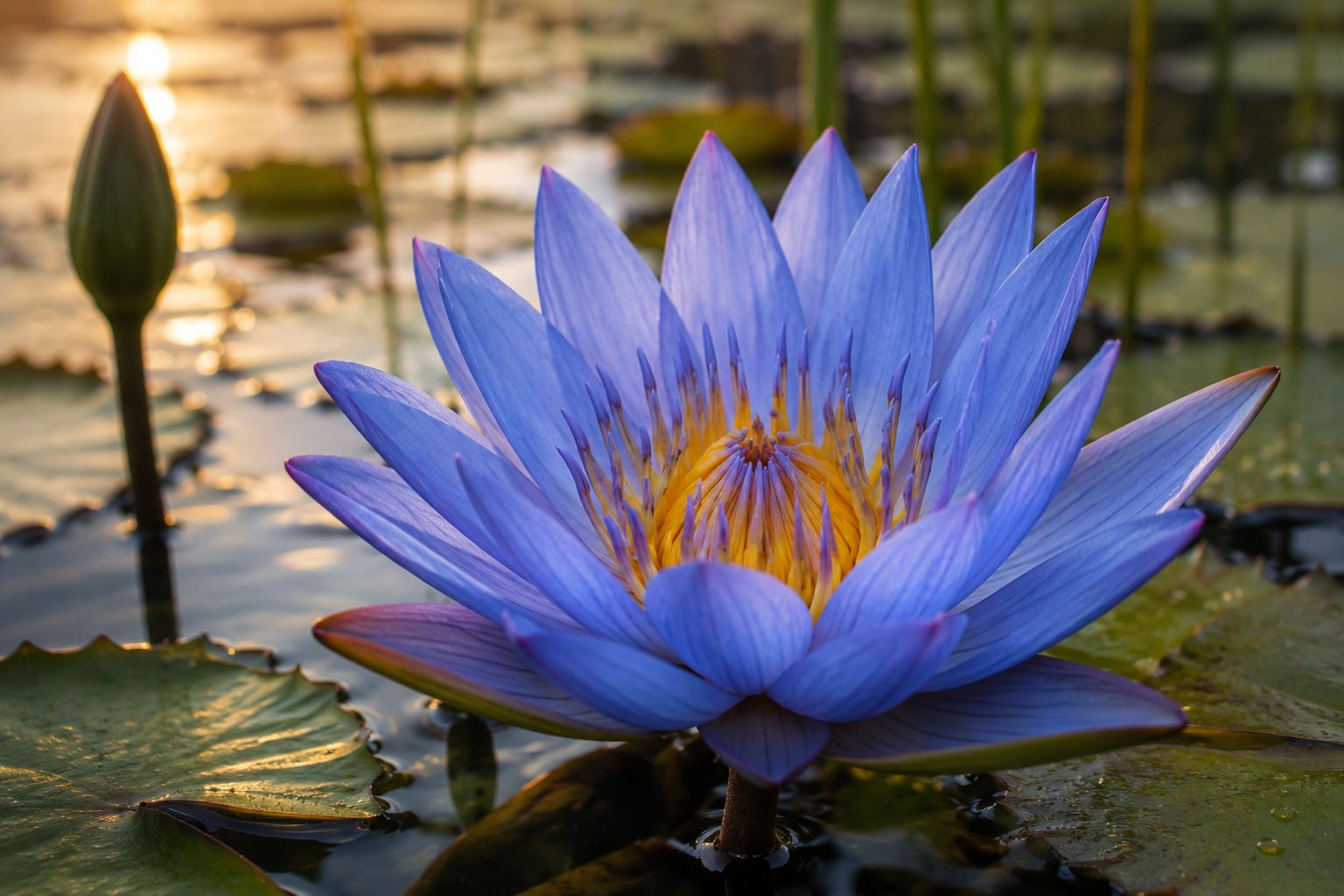
Plant Ally Profile
Nymphaea caerulea
Dreaming • Meditation • Intuition • Presence • Sacred Awareness
The flower of dreaming, contemplation, and sacred awareness.
There are plants call us inward.
Blue Lotus is one of these.
Floating serenely on the surface of ponds and slow-moving waters, Blue Lotus (Nymphaea caerulea) has captivated the human imagination for thousands of years. Revered in ancient Egypt and depicted in temple carvings, funerary texts, and sacred ceremonies, this luminous water lily was associated with rebirth, spiritual awakening, and the mysteries that exist beyond ordinary perception.
Its symbolism is woven into its very nature.
Each morning, the blossoms rise from the water and open to the sun. Each evening, they close and return toward the depths. This daily rhythm made Blue Lotus a living emblem of transformation, consciousness, and renewal.
Historically, the flowers were infused into wine, prepared as tea, and incorporated into ritual and ceremony. While modern science is still exploring its chemistry, traditional use suggests a plant that gently supports relaxation, dreamwork, meditation, and states of quiet reflection.
Blue Lotus was also prized as a perfume in ancient Egypt. Historical accounts and artistic depictions associate its fragrance with beauty, devotion, celebration, and the goddess Isis, while later traditions tell of Cleopatra bathing in Blue Lotus-infused waters.
Unlike herbs that strongly sedate or overwhelm the senses, Blue Lotus is often described as subtle.
Its medicine is not forceful. It is an invitation.
An invitation to slow down.
To listen more deeply.
To create space between thought and awareness.
Many people are drawn to Blue Lotus during periods of meditation, spiritual practice, journaling, creative work, or personal reflection. It has long been associated with intuition, imagination, and the liminal spaces where insight often emerges.
In many contemporary spiritual traditions, Blue Lotus is associated with the third eye and practices intended to cultivate intuition, symbolic awareness, and contemplative insight.
In a world that encourages constant stimulation and distraction, Blue Lotus offers a different path.
Not more information. Not more effort.
Simply more presence.
Some wisdom arrives when we become still enough to receive it.
How To Work With This Ally
Blue Lotus may be especially supportive during seasons of reflection, meditation, dreamwork, and creative exploration.
Sometimes I prepare it as an evening tea before journaling. Sometimes as a tincture before meditation or ritual. Occasionally it becomes part of a larger practice intended to cultivate presence and deepen connection to intuition.
Blue Lotus is a plant to work with when you are ready to slow down.
When you need space around your thoughts.
When you want to remember that awareness itself can be a practice.
Its medicine often feels less like an answer and more like an opening. A gentle invitation to become still enough to notice what has been there all along.
For me, Blue Lotus is a reminder that insight rarely arrives through force. More often, it emerges when we create the conditions to receive it.
Blue Lotus is featured in Seeker and II. High Priestess Tea, where it works alongside other contemplative plant allies to support meditation, reflection, and the sacred practice of attention.
Plant Profile
Botanical Name:Nymphaea caerulea
Family: Nymphaeaceae (Water Lily Family)
Parts Used: Flowers
Energetics: Cooling, moistening
Primary Actions: Nervine, relaxant, contemplative tonic
Traditional Uses: Meditation, dreamwork, ceremony, emotional ease, relaxation, support for contemplative practices
What Modern Research Shows: Research on Blue Lotus remains limited, though studies have identified several bioactive compounds, including the aporphine alkaloids apomorphine and nuciferine. Preliminary research suggests these constituents may contribute to the plant's traditional reputation for promoting relaxation, emotional ease, and altered states of awareness. While modern science is still exploring Blue Lotus, its long history of ceremonial and contemplative use continues to shape contemporary interest in the plant.
Notable Constituents: Aporphine alkaloids, flavonoids, polyphenols, aromatic compounds
Plant Themes: Stillness • Presence • Dreaming • Beauty • Intuition • Sacred Awareness
Esoteric Correspondences
☽ Moon and ♆ Neptune • Water 🜄
Dreaming • Intuition • Mysticism • Receptivity • Spiritual Insight
Meditation and contemplative practice • Dreamwork and visionary states • Deepening intuition • Cultivating inner stillness • Opening to symbolic awareness • Creating sacred and energetic boundaries during ritual • supporting lucid dreaming and conscious dream exploration
Plant Teaching: The unseen is not beyond your reach. Quiet the mind, and what was hidden begins to emerge.
References
Diaz, J. Plant Witchery: Discover the Sacred Language, Wisdom, and Magic of 200 Plants.
Emboden, W. The Sacred Narcotic Lily of the Nile: Nymphaea caerulea
Merlin, M. Archaeological Evidence for the Tradition of Psychoactive Plant Use in the Old World
PubMed literature on Nymphaea caerulea phytochemistry and traditional use
This profile reflects both traditional herbal knowledge and modern scientific understanding. It is intended for educational purposes and should not replace individualized medical advice. As with all herbal medicines, consider the whole person, their health history, and appropriate safety precautions before use.
