Meet Linden
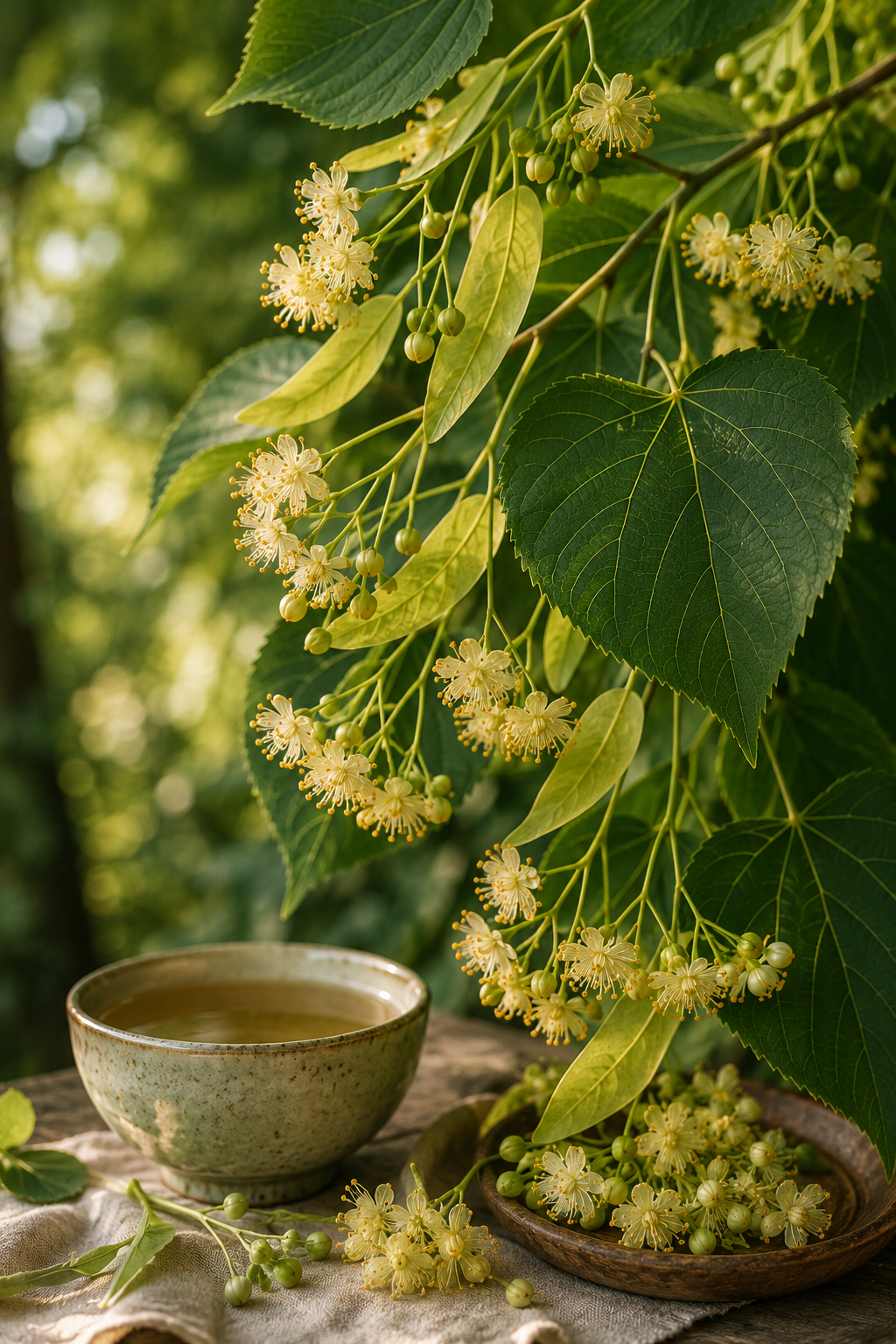
Plant Ally Profile
Tilia americana, T. cordata, T. × europaea & other Tilia species
Spaciousness • Grief • Protection • Heart • Presence
A traditional ally for the heart, the nervous system, and the spaces between.
If you've never stood beneath a flowering linden tree in midsummer, you've missed one of the quiet miracles of the botanical world.
Long before you see her blossoms, you'll notice her fragrance. Sweet, warm, almost honeyed, it drifts through the summer air with surprising reach. Then comes the sound. Thousands of bees moving through the canopy in a steady, resonant hum, gathering nectar from flowers so small they might otherwise go unnoticed. The space beneath a flowering linden feels somehow like a different world, as though everything has agreed, if only for a little while, to breathe more slowly.
People have gathered beneath her branches for centuries.
European villages once met beneath towering lindens to settle disputes and conduct civic business. Lithuanian women offered prayers and gifts to sacred linden trees. Cherokee traditions honored our native basswood in ceremony and medicine. Across continents and generations, people found their way to the same remarkable tree, not simply because she was useful, but because she changed the atmosphere around her.
Herbalists describe Linden as a nervine, an antispasmodic, a diaphoretic, and a cardiovascular ally. Those descriptions are all true.
But they only describe what she does. They don't quite describe who she is.
Linden has an extraordinary gift for creating spaciousness where life has become constricted.
She relaxes tense muscles, eases nervous palpitations, cools inflammatory heat, encourages healthy circulation, and gently quiets a mind that has forgotten how to rest. Robin Rose Bennett beautifully describes Linden as a plant that opens both the emotional and spiritual heart, helping us move with grief rather than becoming imprisoned by it.
In one of my favorite songs, Nick Cave's Lime Tree Arbor, he acknowledges the inevitability of difficult circumstances: "There will always be suffering / It flows through life like water." Yet he goes on to paint a beautiful picture of sanctuary that feels deeply true to Linden's medicine. She becomes a quiet refuge during times of suffering, holding a protective space in which transformation and healing can happen.
To me, Linden is threshold medicine. Whether we stand at the threshold of grief, anxiety, heartbreak, profound change, or spiritual awakening, she does not ask us to hurry through the experience. She holds space for us with remarkable gentleness until we are ready to take the next step.
She appears throughout the Plant Alchemy apothecary.
I find myself returning to Linden often because she reminds us that sometimes healing begins the moment we remember how to soften.
How To Work With This Ally
Linden invites relationship.
Her blossoms make one of the most beautiful herbal teas you'll ever encounter. Softly floral with subtle honey notes, a cup of Linden tea naturally accompanies quiet evenings, meaningful conversations, meditation, journaling, or simply watching the day come to an end.
During seasons of stress, grief, heartbreak, anxiety, or profound transition, she offers companionship. Linden creates enough spaciousness for us to experience our feelings without becoming overwhelmed by them. She reminds us that emotions held in the chest and lungs are not just symptoms to eliminate, but experiences to move through with compassion and presence.
She also shines during times of physical heat and tension. Herbalists have long relied on Linden to encourage perspiration during fever, calm nervous headaches, ease stress-related palpitations, support healthy blood pressure, and soothe digestive upset that accompanies anxiety and overwhelm.
A strong infusion of Linden blossoms also makes a wonderfully restorative bath, a traditional practice that gently relaxes both body and spirit while surrounding you with her unmistakable fragrance.
If you're fortunate enough to encounter a flowering Linden tree, spend time beneath her canopy before harvesting her blossoms. Listen to the bees. Breathe deeply. Let your nervous system experience the atmosphere she creates. The relationship begins there.
You'll find Linden throughout the Plant Alchemy apothecary. She is the primary ally in Wild Honey, Good Company, and Open Sky Nourishing Infusions, lends her sweet presence to Liquid Light, and supports restful evenings in both Daily Grind Tea and Daily Grind Tincture.
Plant Profile
Botanical Name:Tilia americana, T. cordata, T. × europaea, T. platyphyllos, and related species
Family: Malvaceae (formerly Tiliaceae)
Parts Used: Flowers with bracts, leaves, inner bark
Energetics: Cooling • Drying • Relaxing • Softening
Primary Actions: Nervine • Antispasmodic • Diaphoretic • Cardiovascular Tonic • Mild Hypotensive
Traditional Uses: Anxiety • Nervous tension • Stress-related palpitations • Restless sleep • Fever • Colds & influenza • Tension headaches • Digestive upset associated with stress • Healthy circulation • Emotional grief
Modern Research: Linden flowers contain flavonoids including quercetin and kaempferol, soothing mucilage, phenolic acids, tannins, volatile oils, and other constituents that help explain her longstanding use for supporting the nervous, cardiovascular, respiratory, and integumentary systems.
Notable Constituents: Flavonoids • Mucilage • Phenolic acids • Tannins • Volatile oils
Plant Themes: Spaciousness • Threshold • Protection • Comfort • Heart Opening
Esoteric Correspondences
♃ Jupiter • 🌬 Air
Protection • Love • Rest • Grief • Blessing
Applications: Meditation • Heart-opening rituals • Grief support • Sleep pillows • Herbal baths • Sacred gathering
Plant Teaching:
"Linden holds comforting space at the threshold of deep emotion, reminding us that what is fully felt can finally begin to heal."
Species Note: European Linden (Tilia cordata, T. × europaea, and T. platyphyllos) are the traditional pharmacopoeial species, while American Basswood (Tilia americana) shares similar medicinal qualities and has long been used throughout North America by Indigenous communities and Western herbalists alike.
References
Bennett, Robin Rose. The Gift of Healing Herbs.
Chevallier, Andrew. Encyclopedia of Herbal Medicine.
Cunningham, Scott. Encyclopedia of Magical Herbs.
Dunbar, Jo. Secrets from an Herbalist's Garden.
Grieve, M. A Modern Herbal.
Easley, Thomas & Horne, Steven. The Modern Herbal Dispensatory.
Hamel, Paul B. & Chiltoskey, Mary U. Cherokee Plants and Their Uses.
McGuffin, Michael, et al. Botanical Safety Handbook.
Wood, Matthew. The Earthwise Herbal, Volume 1: Old World Medicinal Plants.
