Prickly Pear Seed Oil
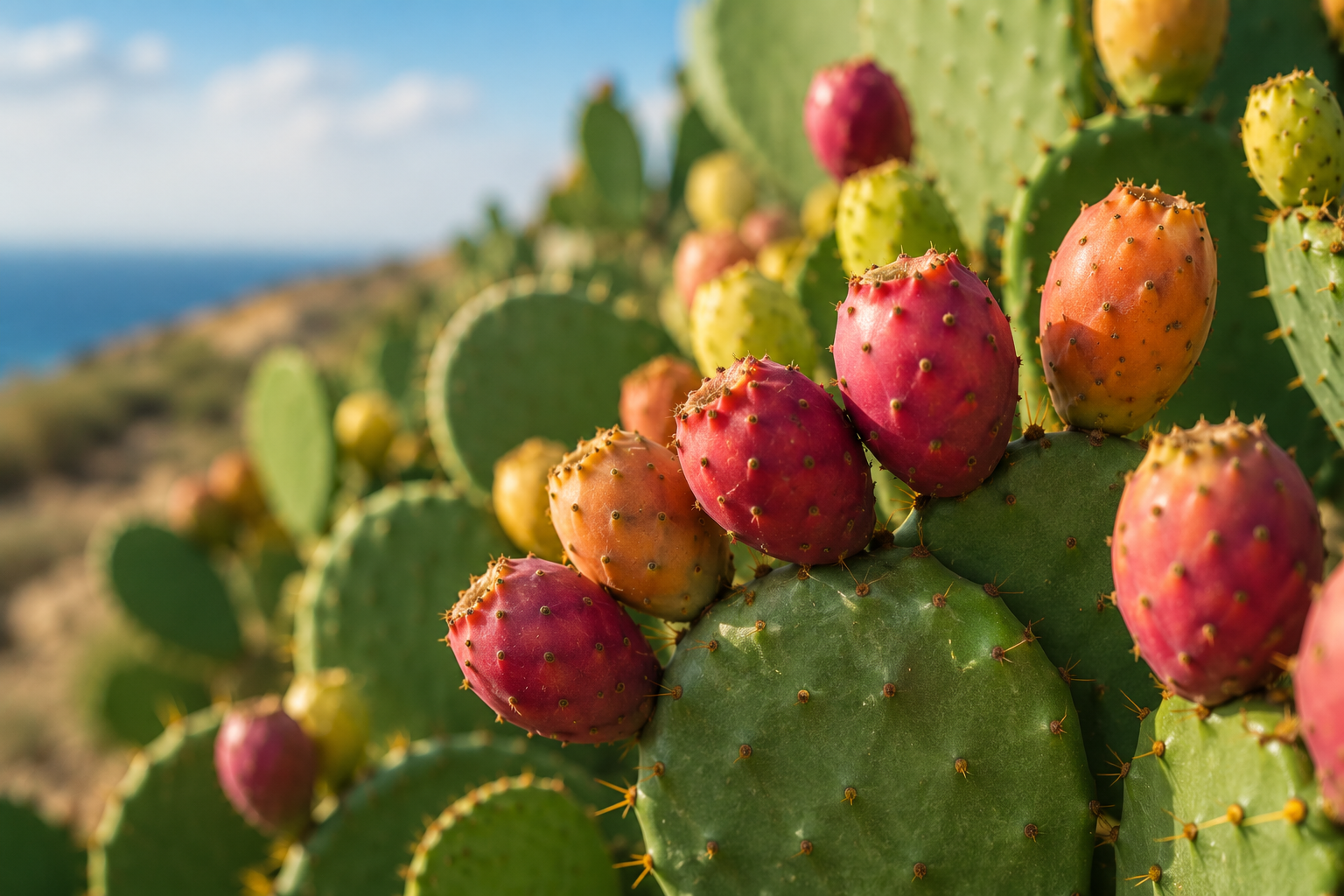
Tiny desert jewel, big lipid sorcery. 🌵
Prickly Pear Seed Oil is a rare, lightweight botanical oil pressed from the tiny seeds of Opuntia ficus-indica, the resilient cactus also known as Barbary fig or cactus pear. Rich in linoleic acid, tocopherols, phytosterols, and antioxidant compounds, it offers elegant barrier support, luminous skin conditioning, and a surprisingly featherlight finish for an oil so nutritionally dense.
Identity Card
Botanical Name
Opuntia ficus-indica
Plant Family
Cactaceae
Plant Part
Seeds
Native Range
Native to the Americas, now widely cultivated in Mexico, the Mediterranean, North Africa, the Middle East, and other arid regions
Extraction Method
Cold-pressed preferred; also solvent-extracted or CO₂-extracted in research and industry
INCI Name
Opuntia Ficus-Indica Seed Oil
Primary Lipids
Linoleic acid • Oleic acid • Palmitic acid • Stearic acid
Key Constituents
Tocopherols • Phytosterols • Polyphenols • Carotenoids • Chlorophyll pigments
Skin Feel
Silky • Satin • Featherlight
Absorption
Rapid to moderate
Oxidative Stability
Moderate, supported by natural tocopherols but still vulnerable due to high polyunsaturated fatty acid content
Shelf Life
Typically 6–12 months once opened; longer if fresh, well-made, and stored cold/dark
Common Uses
Facial oils • Serums • Under-eye oils • Barrier-support blends • Mature skin formulas • Lightweight body oils
Primary Actions
Barrier Support • Emollient • Antioxidant • Skin Conditioning • Soothing • Luminous Finish
At a Glance
Best For
Dry, dull, sensitive, mature, hormonally shifting, combination, and barrier-compromised skin.
Pairs Well With
Squalane, jojoba, camellia seed oil, rosehip seed oil, argan oil, pomegranate seed oil, meadowfoam seed oil, sea buckthorn CO₂, and vitamin E.
Plant Alchemy Formulations
Afterglow • Veil • Botanical Body Care formulations where lightweight luminosity, antioxidant protection, and skin-softening barrier support are desired.
Related References
Botanical Chemistry: Linoleic acid, tocopherols, β-sitosterol
Plant Ally: Prickly Pear
Behind the Bottle: Afterglow / Veil / Altar as applicable
Botanical Background
Prickly pear cactus is a desert survivor: thick-padded, water-wise, sun-bathed, and armored. Opuntia ficus-indica produces colorful fruits filled with numerous small seeds. Though the fruit and pads have a long history of food and traditional use, the seed oil itself has become especially prized in modern skincare.
The entire fruit contains only about 9–10% seeds, and the seeds themselves yield relatively little oil, which helps explain why true prickly pear seed oil is expensive and often reserved for premium skincare formulations. Scientific review literature notes that extracted oil may represent only about 5–15.5% of seed composition, depending on origin, cultivar, and extraction method.
This is the desert’s smallest treasure chest: a tiny seed holding a luminous, lipid-rich oil.
Traditional Use
The broader prickly pear plant has been used as food, medicine, and drought-resilient nourishment in many regions. The fruit, pads, flowers, and seeds have been used traditionally in food preparations and folk medicine, especially in arid regions where the plant thrives.
The seed oil’s use as a luxury skincare ingredient is more modern, driven by its high linoleic acid profile, antioxidant content, and exceptional sensory elegance. Contemporary cosmetic references emphasize its role in barrier support, hydration, softness, brightness, and antioxidant protection.
Extraction & Processing
Prickly pear seed oil may be extracted through cold pressing, solvent extraction, supercritical CO₂, ultrasound-assisted extraction, or other experimental methods. For botanical skincare, cold-pressed, unrefined or minimally refined oil is usually preferred because it best preserves delicate unsaponifiable compounds, including tocopherols, sterols, pigments, and phenolic constituents.
Research notes that yield varies significantly by cultivar, geography, fruit maturity, harvest season, seed preparation, and extraction method. Solvent methods often produce higher yields, while cold pressing is more aligned with premium cosmetic quality and clean-label formulation.
Quality indicators include:
Fresh, mild aroma
Golden to greenish-yellow color
Low peroxide value
Low acidity
Cold-pressed extraction
Dark glass packaging
Clear sourcing and harvest information
Lipid Composition
Prickly pear seed oil is best understood as a high-linoleic botanical oil. Review data characterizes it as containing roughly 80–88% unsaturated fatty acids, with linoleic acid as the dominant fatty acid. Reported ranges include linoleic acid around 49.3–78.8%, oleic acid around 12.8–25.3%, palmitic acid around 9.3–14.3%, and stearic acid around 2.2–4.3%.
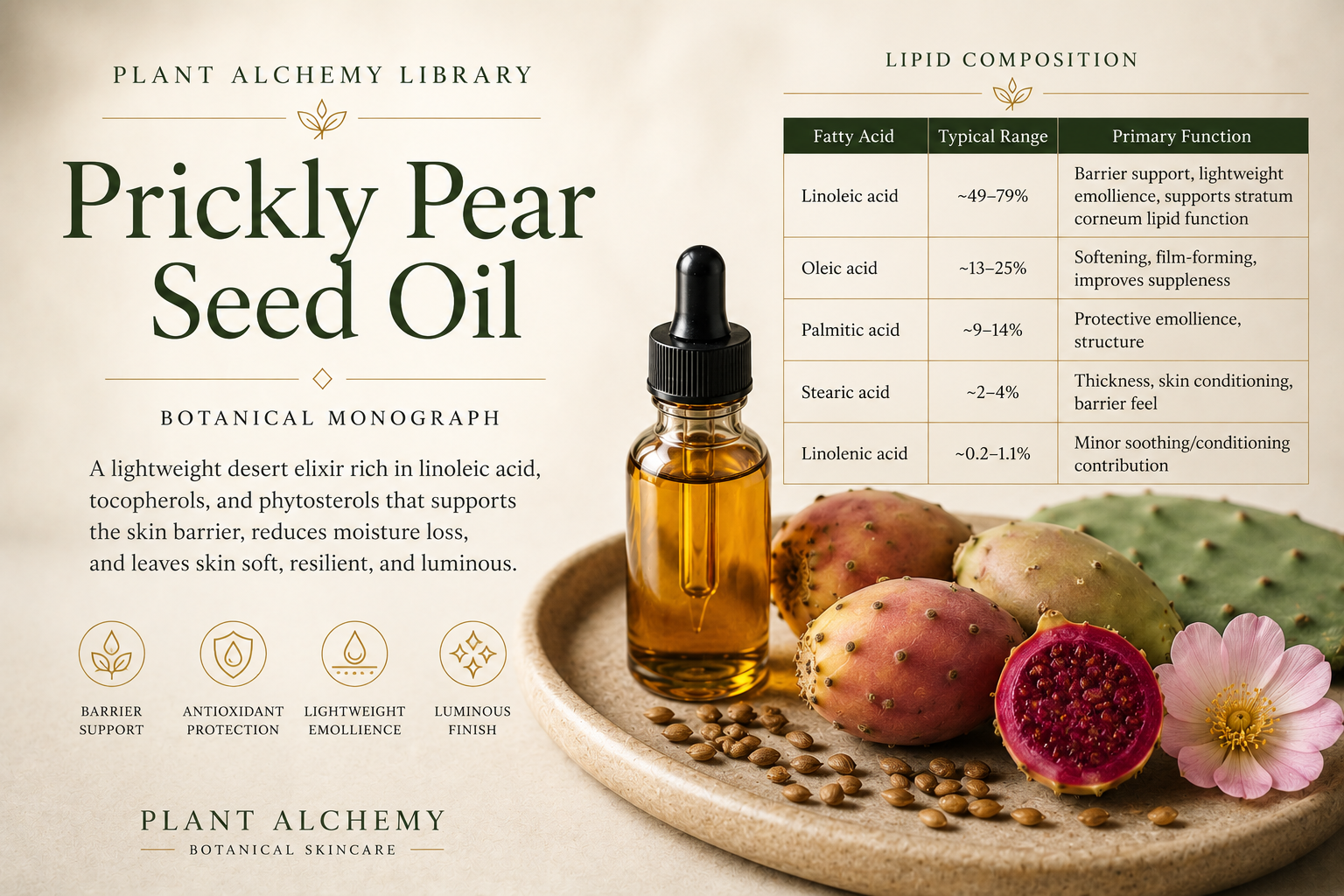
Because it is so linoleic-forward, prickly pear seed oil feels lighter and less occlusive than richer oleic oils. It gives cushion without greasiness, which makes it especially useful in facial oils where elegance matters.
Unsaponifiable Constituents
Prickly pear seed oil is valuable not only because of its fatty acids, but because of its unsaponifiable fraction: the tiny botanical “extras” that do much of the glamour-work.
Tocopherols
Prickly pear seed oil contains meaningful tocopherol levels, with some research identifying γ-tocopherol as a major form. Tocopherols contribute antioxidant activity and may help protect both the oil and the skin from oxidative stress.
Phytosterols
β-sitosterol is the dominant sterol marker in many analyses, with campesterol, stigmasterol, avenasterols, and other sterols also reported. In the review literature, β-sitosterol and campesterol are repeatedly identified as major phytosterols, and sterol composition may help authenticate the oil.
Polyphenols
Polyphenols and other phenolic compounds contribute antioxidant potential. Reported total polyphenol content varies widely depending on origin and extraction method, but studies confirm that phenolic compounds are part of the oil’s antioxidant profile.
Pigments
Carotenoids and chlorophylls may contribute color and antioxidant activity, especially in less-refined oils.
Skin Physiology & Mechanisms of Action
Barrier Support
Prickly pear seed oil supports the skin barrier primarily through its linoleic acid content. Linoleic acid is important for the organization of the stratum corneum lipid matrix, helping reduce transepidermal water loss and improve skin comfort. Skincare references repeatedly describe prickly pear seed oil as supportive for dry, tight, and barrier-stressed skin.
Antioxidant Protection
Tocopherols, phytosterols, and phenolic compounds help explain the oil’s antioxidant reputation. Antioxidant activity matters cosmetically because oxidative stress can contribute to dullness, inflammation, collagen degradation, and visible aging.
Inflammation & Reactivity
A 2020 study found that prickly pear oil showed topical anti-inflammatory and antioxidative effects, reducing inflammatory markers and improving oxidative stress parameters. This supports its use in soothing, barrier-supportive formulations.
Elasticity & Mature Skin
The oil’s antioxidant and sterol content makes it especially appropriate in mature-skin formulations. Prickly pear seed oil helps support skin resilience, softness, luminosity, and a healthier-looking barrier environment.
Brightness & Under-Eye Use
A 2025 sustainability and consumer paper notes vitamin K1 content in prickly pear seed oil and its cosmetic association with dark circles and visible vascular discoloration.
Formulation Characteristics
Prickly pear seed oil is one of those rare oils that feels expensive because it behaves beautifully. It absorbs quickly, leaves a satin finish, and gives skin a soft, luminous appearance without a heavy slick.
Texture
Light, silky, satiny, and non-greasy.
Slip
Moderate slip. Elegant rather than oily.
Absorption
Rapid to moderate. Excellent for facial oils and final-step serums.
Layering
Works well over hydrating serums, under moisturizer, mixed into creams, or pressed onto damp skin.
Typical Use Levels
Facial oils: 5–30%
Luxury facial serum: 10–50%
Eye oil: 5–20%
Body oil: 3–15%
Hero oil formulation: up to 100%, if cost allows
Synergistic Oils
Squalane: improves spread, stability, and featherlight feel
Jojoba: balances skin feel and sebum affinity
Camellia seed oil: adds silk and oleic softness
Rosehip seed oil: enhances regenerative positioning
Meadowfoam seed oil: improves oxidative stability
Pomegranate seed oil: deepens mature-skin support
Argan oil: supports elasticity and richness
Stability & Storage
Because prickly pear seed oil is high in polyunsaturated fatty acids, it should be treated as moderately delicate despite its natural tocopherol content.
Store in:
Miron or amber glass
Cool temperatures
Minimal headspace
Away from heat and direct light
Add antioxidants such as mixed tocopherols or rosemary CO₂ when appropriate. Avoid prolonged heating during formulation.
Safety Considerations
Prickly pear seed oil is generally well tolerated in topical skincare.
Considerations:
Patch test for highly reactive or allergy-prone skin.
Avoid using oxidized oil, especially on sensitive or inflamed skin.
No specific topical contraindication is noted for pregnancy or lactation when used cosmetically.
For infants or very young children, keep formulas simple and patch test carefully.
Avoid contamination and rancidity, as oxidized oils can worsen irritation.
Sustainability & Sourcing
Prickly pear cactus is drought-resilient and thrives in arid environments, making it an attractive ingredient within green cosmetics. A 2025 consumer study notes that prickly pear seed oil is increasingly valued in sustainable cosmetics and that consumers respond strongly to environmental impact, safety, and label transparency.
Still, sustainability depends on sourcing integrity. Because the oil is costly and labor-intensive, adulteration is a real concern. Choose suppliers that provide:
Botanical identity
INCI name
Extraction method
Country of origin
Lot-specific COA
Peroxide value
Fatty acid profile
Organic or regenerative sourcing when possible
Formulator’s Insight
Prickly Pear Seed Oil earns its place in Plant Alchemy formulations because it brings three gifts at once: barrier support, antioxidant elegance, and desert-light luminosity.
It is a fine, golden thread: softening, brightening, breathable, and refined.
In formulation, it does what few oils can do. It makes the skin feel tended without feeling coated. It gives mature and sensitive skin a sense of cushion without dragging the finish into heaviness. In body oils, it adds luxury. In facial oils, it adds intelligence. In a blend, it behaves like the quiet ingredient that makes every other ingredient shine.
Key References
Al-Naqeb, G. et al. “Prickly Pear Seed Oil Extraction, Chemical Characterization and Potential Health Benefits.” Molecules, 2021.
Bardaa, S. et al. “The Effect of Prickly Pear, Pumpkin, and Linseed Oils on Biological Mediators of Acute Inflammation and Oxidative Stress Markers.” BioMed Research International, 2020.
Timpanaro, G. & Cascone, G. “Consumer behavior and sustainability: Exploring Italy’s green cosmetics market with prickly pear seed oil.” Heliyon, 2025.
School of Aromatic Studies, “Prickly Pear Seed Oil and the Skin.”
Typology, “How does prickly pear seed oil benefit the skin?”
